Building the Movement Design for There’s Nothing You Can Do
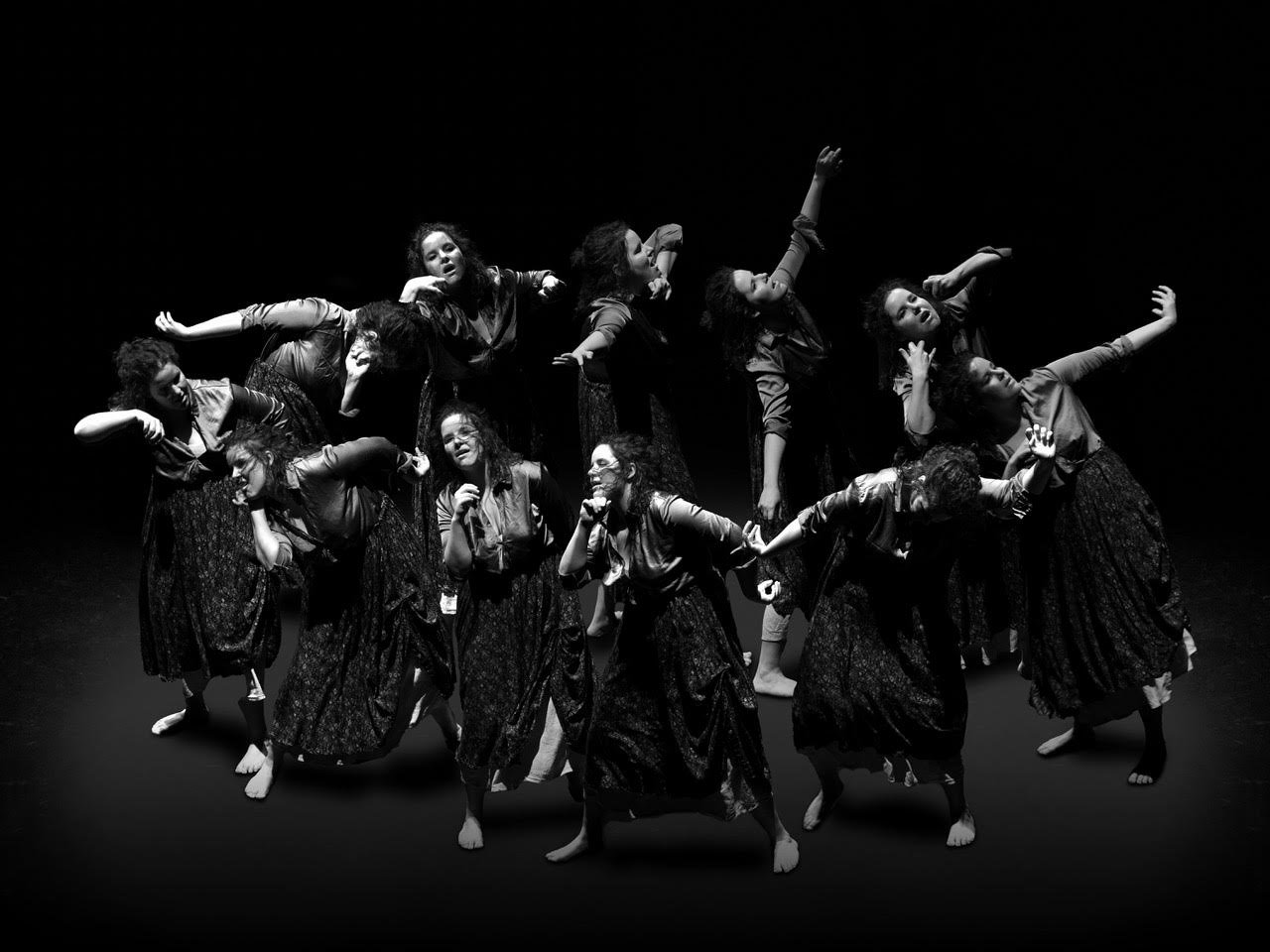
There’s Nothing You Can Do, RCA Theatre Company, 2025
Movement Direction, Choreography, Intimacy Direction by Lynn Panting
photo by Marie Dionne Photography
Working on this piece was a rare and rich experience.
I first encountered the play, by the fabulous Cole Hayley, during its debut at the National Theatre School of Canada and was later invited to participate in a movement dramaturgy workshop during its second development phase. That early involvement allowed me to explore the practicalities of the work before committing to any formal movement design.
One of the central questions we faced was: how can the actors “dance themselves to death” without actually harming themselves in the process?
Before rehearsals officially began, we held a four-day movement workshop with the full cast. This time was essential. It allowed us to establish a shared vocabulary, experiment with tools and tactics, and build the kind of ensemble trust that supports deep physical storytelling and builds stamina. The goal wasn’t to set choreography—it was to create a process that felt authentic, responsive, and sustainable.
The Design Toolbox
The movement design I landed on is not a single style or aesthetic. It’s a collection of tools the actors can draw on, adjust, and reinterpret to suit their character’s arc and moment-to-moment needs.
Core Principles of Variation: Scale (big/small), tempo (fast/slow), level (high/low), and pathway (curved/straight) help shift energy and tone without words.
Laban Technique: Using oppositional pairs (like bound/free flow, heavy/light weight, direct/indirect movement) provides a physical lens for emotional choices.
Intensity Scale (0–10): Allows actors to safely gauge and modulate how much they’re putting into each moment.
Locomotor Vocabulary: Shared movements like crawling, rolling, spiraling, and jumping help break habitual patterns and create physical contrast.
Kinetic Layering of Symptoms: I used the technical language that described the physical symptoms of illness, trauma, substance use and withdrawal as an additional layer. Rather than labelling internal states with emotional language (e.g., “anxiety” or “fear”), actors are encouraged to use the technical, observable language of the body—such as pacing, fidgeting, trembling, shallow breathing, or sudden stillness.
This technique, focusing on what the body does, rather than what the mind feels and thinks, removed unnecessary emotional weight.
Shared Dance Vocabulary: A collection of physical motifs we all know—but that each performer expresses differently. The result is cohesion without sameness.
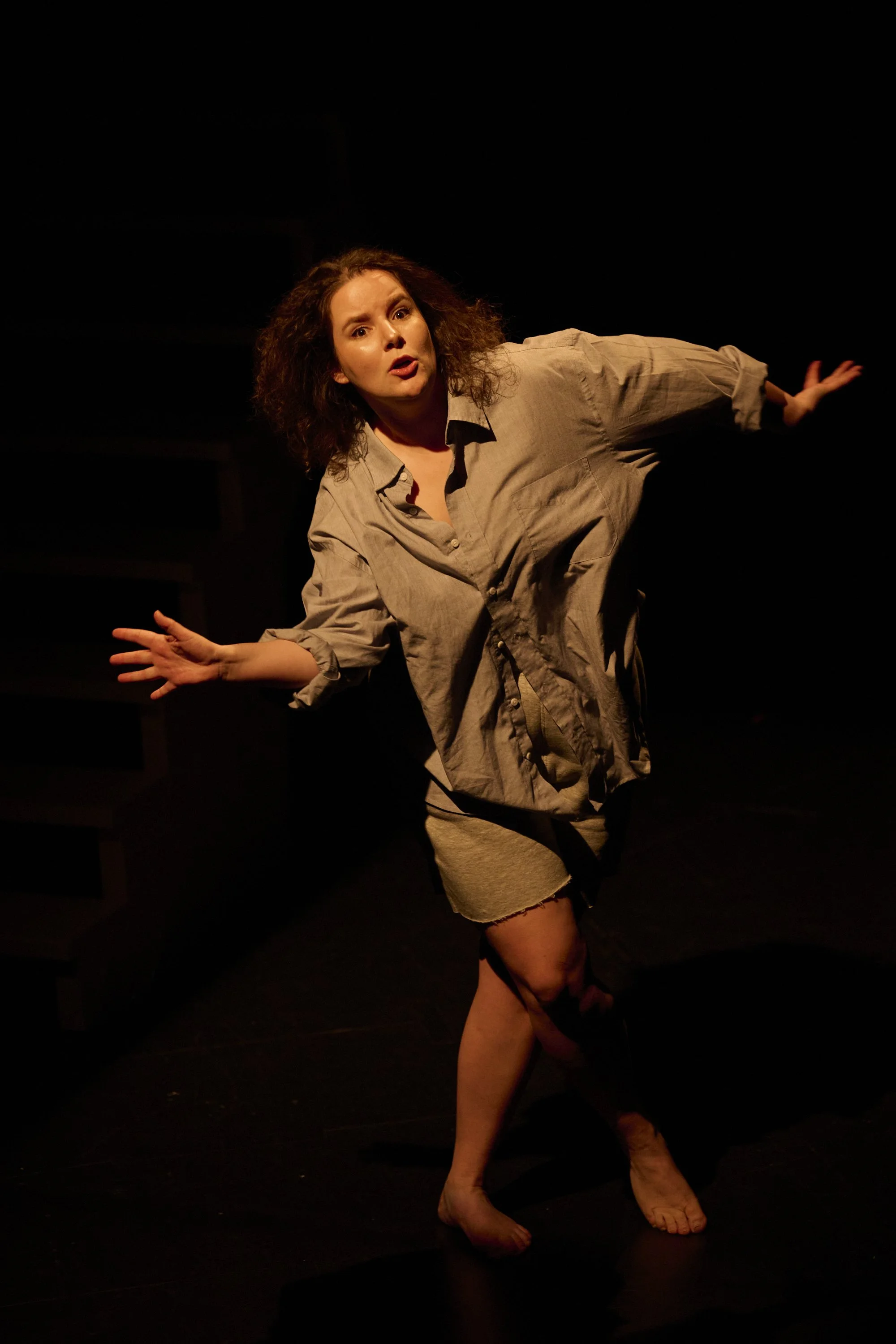
photo by Marie Dionne Photography
Miriam
Miriam is a unique character—the only one whose full movement journey we witness from beginning to end, and then back again. I was incredibly fortunate to work with actor Nora Barker, whose work and precision brought the role to life in unexpected and layered ways.
Miriam’s physical journey begins as a slight vibration. The script specifies that these gestures gradually grow into recognizable dance moves—flossing, jazz hands—allowing us to lean into the humour of the moment while maintaining its eerie undercurrent. As the movement builds and Miriam speaks less, her body begins to do the talking. She interacts with the set and the other characters in ways that reflect, comment on, and sometimes even mimic the world around her.
Her body becomes both mirror and critic, revealing an internal landscape that words can’t access.
Eventually, Miriam foreshadows the tragedy that looms over Act One. Her resulting solo is a complex blend of resistance and surrender, ecstasy and pain. It was a challenging balance to strike—one that required both control and abandon—and I was lucky to have Nora as a collaborator throughout that process.
When Miriam returns at the end of Act Two, it was clear to me that her vocabulary had to evolve. We couldn’t repeat what had come before. The character has been altered—something irreversible has happened. Her movement remains constant, but it’s no longer rooted in contemporary language. It now belongs to something more ancient.
We drew from the iconography of ancient statues and Greek mythology to develop a new vocabulary: poses, cycles, and gestures that speak to myth, legacy, and ritual. This movement is still kinetic, still present, but it exists on a deeper frequency—something more ancestral, almost divine. It becomes a kind of embodied mythmaking that starkly contrasts the rest of the ensemble, who haven’t been infected with dance fever for as long.
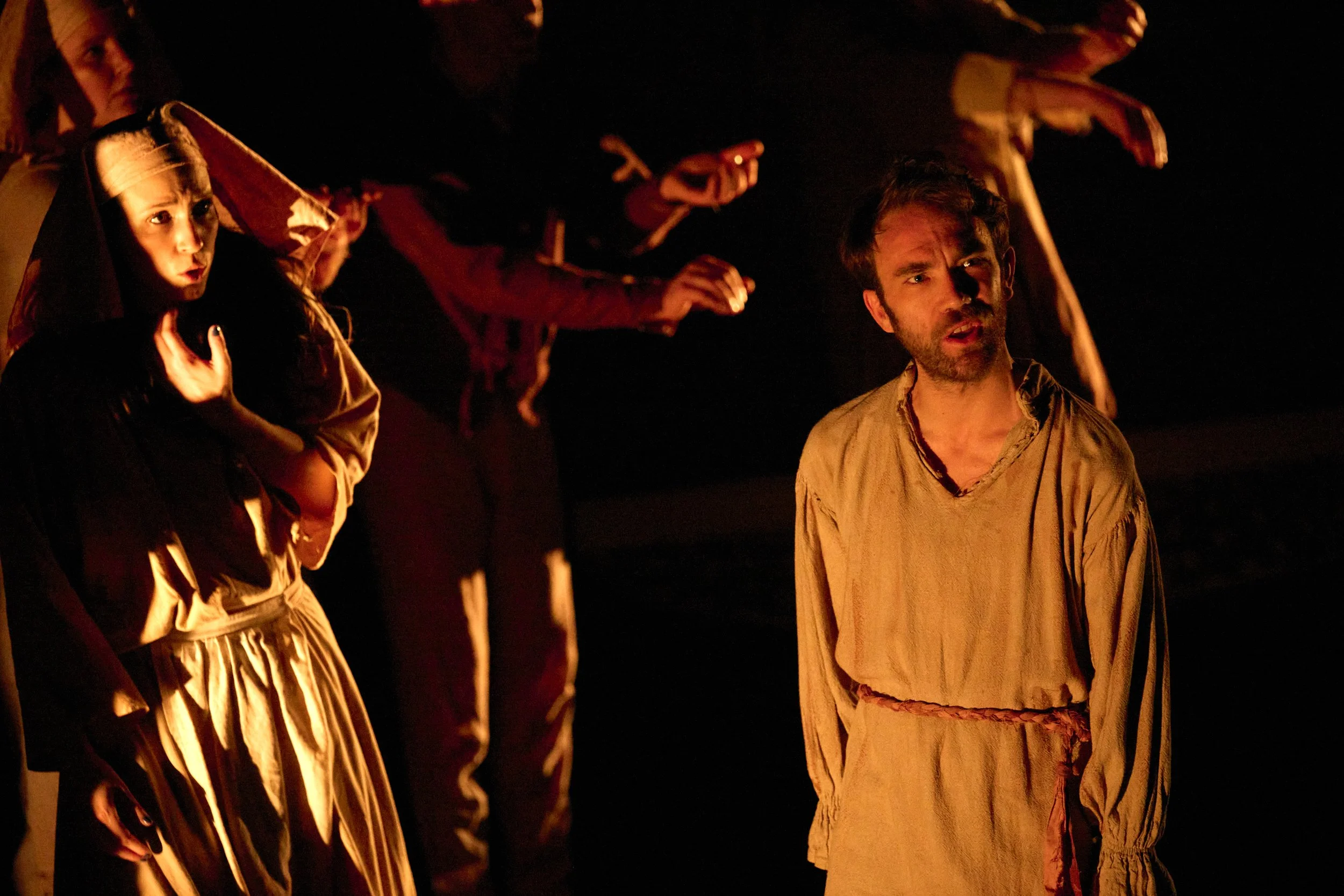
photo by Marie Dionne Photography
Act 3: Moving Together While Apart
One of the most exciting and difficult parts of the show is Act 3, when each character becomes visually and emotionally isolated. They stop sharing space, storylines, and in some cases, even time. But the ensemble never stops moving together.
I created a detailed movement score for each line of text that draws attention to the speaker and allows the others to rest.
While one actor speaks the others would take that time to transition to their next movement, thus giving the impression that the body drives the text.
Even when disconnected, the performers remain in tune—building the kind of support structure that allows for deep risk onstage.
Final Thoughts
Dance is magic. At its core, this movement design is about connection—to one another, to the body, to the audience, to the heart of the text.