
Choreographing Connection
Choreographing Connection is Lynn Panting’s professional practice blog, offering reflections on her artistic work and the arts sector at large. Through her lens as a director, choreographer, and intimacy professional, she shares think pieces, resources, strategies, and insights that speak to the evolving landscape of the performing arts.

To Work or Not To Work, That is the Question.
Many of us take the work. We waive fees. We accept sliding scale. We underpay ourselves so others can be paid. We do it because the work matters. Because we believe in access. Because we believe in community. Because we don’t want to be the reason a project doesn’t happen.
And in isolation, those choices can feel generous.
But at scale, they become structural.
What do you do when the choice is to work for free, or not work at all?
It’s the reality many artists and arts workers are navigating right now and we are not really talking about it.
Inflation is real.
Funding has been reduced or frozen.
We are in a recession.
And yet, expectations haven’t shrunk. Seasons are still being planned. Programs are still being announced. Deliverables remain the same, even as resources contract.
No one wants to shrink. No one wants to feel like a failure. Artists don’t want to stop making work, myself included. Funders don’t want to fund less “impact”. So instead of contraction being addressed , it gets absorbed by artists and arts workers.
For many of us, art is not simply a job, it is a calling.The impulse to create does not disappear just because funding does.
And that’s where things get complicated. Because when art is something you would do anyway, paid or not, the line between choice and coercion becomes very thin.
When the options are work for free or don’t work at all, is that really a choice?
Many of us take the work. We waive fees. We accept sliding scale. We underpay ourselves so others can be paid. We do it because the work matters. Because we believe in access. Because we believe in community. Because we don’t want to be the reason a project doesn’t happen.
And in isolation, those choices can feel generous.
But at scale, they become structural.
Unpaid and underpaid labour is quietly filling the gap left by shrinking resources. The result is an industry that appears to be thriving, while the people inside it are increasingly exhausted, financially strained, and stretched past sustainability.
I would like to name the reality that many artists are subsidizing the arts with their own lives.
With their time.
With their health.
With work they are more than qualified to be paid fairly for, work that would be paid fairly in almost any other sector.
And yet, because art is a calling, because dedication is normalized, this labour becomes invisible.
We need to be able to talk about this tension without shame: the truth that many artists will continue to make work even when conditions are untenable and that this very devotion is being relied upon, whether intentionally or not, to keep the system running.
I would love more transparency from organizations about their struggles and how they are managing to maintain their output.
I would love for funders to acknowledge that current funding structures contribute to an arts ecosystem that rewards financial privilege.
I offer that we have to talk openly about scale, compensation, and contraction. That we recognize that shrinking budgets cannot keep being absorbed by invisible labour.
In general we should talk more about what is really going on.

On Taking a Note
Actor, Bradley Whitford, talks about the three stages of taking a note:
“F**k you.”
“I’m Sh*t”
“Okay.”
And nothing has ever resonated more deeply.
Over time I’ve built systems and practices that help me move through the first two stages faster so I can land in “okay” and do the work.
I’d thought I’d share.
I hate receiving a note.
I hate being told what to do.
I might just have a general issue with authority, but that is for therapy, not this blog, so I digress.
Actor, Bradley Whitford, talks about the three stages of taking a note:
“F**k you.”
“I’m Sh*t”
“Okay.”
And nothing has ever resonated more deeply.
Over time I’ve built systems and practices that help me move through the first two stages faster so I can land in “okay” and do the work.
I’d thought I’d share.
Do the Prep Work, So the Note Doesn’t Feel Like a Personal Failure
When I’ve done my homework/prepwork, when I know I’ve brought my full self to the room, a note doesn’t threaten my sense of competency.
Prep work for me includes:
grounding myself before rehearsal
warming up my body and voice
eating properly
understanding the material (I know that some people can, but I cannot wing it)
knowing my choices and why I made them
reviewing content from the previous rehearsal
being prepared in general
Work Only With People You Trust
I am extremely intentional about who I collaborate with.
I avoid directors who use rehearsal to perform authority.
I avoid “leaders” who haven’t done the personal work required to direct other humans.
I choose collaborators who show:
clarity
care
respect
aligned values
emotional maturity
This matters because taking a note requires vulnerability.
You cannot be open in a room where you don’t feel safe.
When I know a director is working from generosity I can hear the note for what it is: an invitation to help the piece grow.
Recognize the First Two Emotional Stages… and Don’t Act From Them
One thing that I have learned is that my first instinct is my worst instinct.
I need time to steep.
Land in “Okay,” Where Collaboration Can Actually Begin
Stage 3 “okay” is where the work actually happens.
“Okay” is an active choice to trust the process, trust the relationship, and trust myself.
Taking a note will probably never feel easy for me. But it has become possible because I’ve built systems to support me and honour my professionalism.
This is what I try to remember:
A note is about the work.
And the quicker I can navigate the emotional stages and land in okay, the more spacious, collaborative, and joyful the process becomes.
A Look Back Before Looking Ahead: 2025 in Celebration
One of my resolutions in 2025 was to celebrate my wins. I struggle with that, preferring to move swiftly to the next project: to get to work. So here it goes.
I love setting intentions.
I love taking time to be mindful, to revise, to blue-sky, to zoom out and look at the big picture.
When you’re in the middle of things, it can be hard to see momentum. It can feel like you’re stuck. I find that there’s real clarity in pausing to look back at the year behind me.
Also, one of my resolutions in 2025 was to celebrate my wins. I struggle with that, preferring to move swiftly to the next project: to get to work. So here it goes.
A note:
Even though one of my core values is staying in my own lane, I’ll be the first to admit that comparison still sneaks in. If reading this is not helpful for you right now, or makes you feel some type of way, close the window. I’ll catch you on the next one!
Cheers to you and the year ahead.
Separating Identities, Strengthening Practice
One of the biggest shifts this year was formally separating my professional practice from my dance school. For a long time, those two worlds ran in tandem. They informed each other, but they also blurred together. In an effort to clarify my identities and to give people a clearer window into my work as a director, movement director, choreographer, and intimacy professional, I created a new Instagram account and this blog, Choreographing Connection.
That step felt both practical and personal.
In 2024, I was diagnosed with a text processing disorder, and the recommended tools and supports have genuinely changed my life. For the first time, getting my thoughts onto the page felt possible rather than exhausting. Creating Choreographing Connection has been a joy. It’s become a place where I can think out loud, reflect on process, and articulate values that have long lived in my body but not always in my words.
Deepening the Work: Ensemble Building
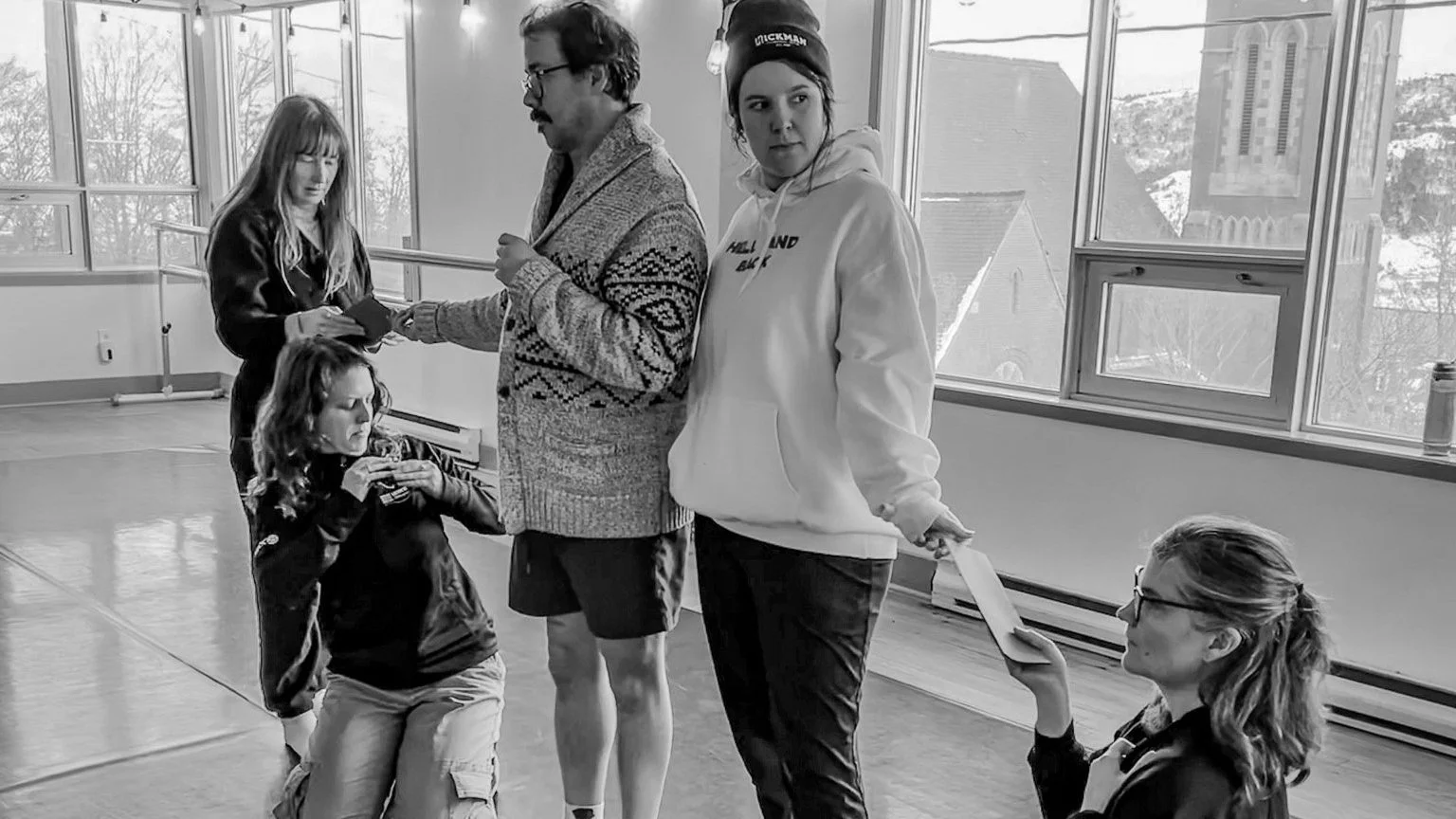
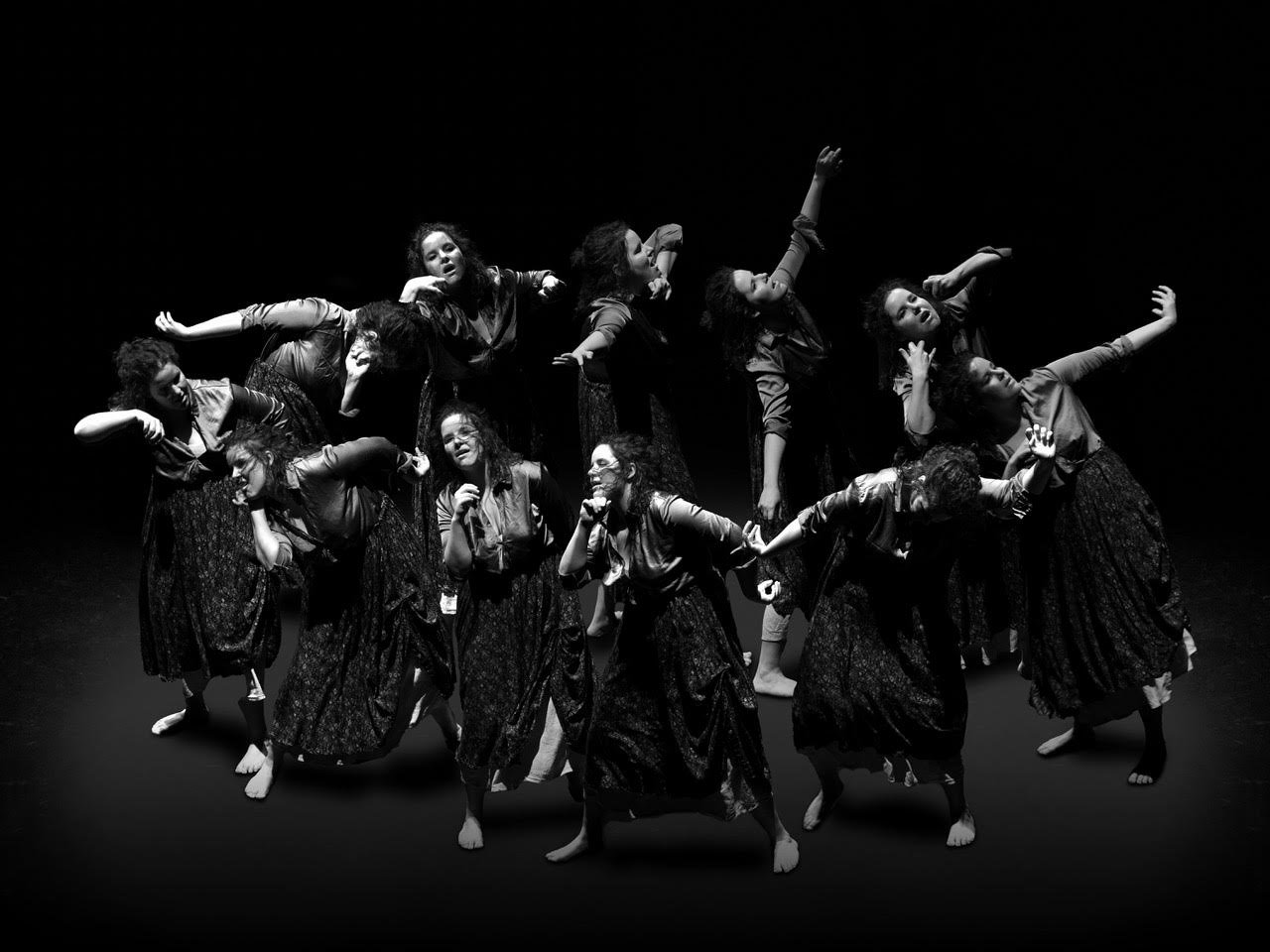
With support from ArtsNL, I was also able to take a meaningful deep dive into my ensemble-building practice: Responsive Ensemble Framework (working title). This work allowed me to slow down and formally examine the systems I use in rehearsal: how rooms are set up, how trust is built, and how to build worlds unique to the folks in the room.
Through workshops, “writing”, and reflection, I began articulating what has often been intuitive. That process has been incredibly affirming. It reminded me that the way we work matters just as much as what we make.
Projects That Shaped the Year
This year also brought some deeply impactful creative projects.
I worked as movement director and intimacy coordinator on There’s Nothing You Can Do by Cole Haley, produced by Resource Centre for the Arts Theatre Company. This was one of the most challenging pieces I’ve worked on, demanding high levels of movement literacy, stamina, and rigorous attention to safety. It pushed everyone involved, myself included. I’m incredibly proud of that work and grateful for the trust and commitment of such an extraordinary cast.
My biggest love of the year, though, was Love’s Labour’s Lost. Returning to a play I’d worked on before, this time leading a large ensemble through classic text, was a gift. Much of my directing work has been in original creation, so stepping fully into Shakespeare with a clear vision for how I wanted the room to function felt both new and deeply aligned. It was also scary. Who am I to direct Shakespeare, especially when my relationship to text is challenging? In the end, it more than worked out. What a joyful, generous, and talented group of artists. I had an absolute blast this summer.
I also said yes to:
New performance opportunities outside of my regular collaborators.
Dipping my toe into the film world as an intimacy coordinator for Netflix, where I learned so much and gained a deeper respect for the nuances of on-set dynamics.
Continuing the work of Ladies Who Lunch with our ninth Three Tales of Terror and a remount of SpookyChristmasTown.
Development of Mayflies VR produced by Untellable Movement Theatre.
Beginning development with Phil Goodridge and Jaimie Tait on The Station through Untellable’s Incubator program.
Debuting my short film The Dress which travelled to festivals, and screened at the Festival of New Dance.
Completing the Intimacy Professionals Accelerator Program though IDC.
Fostering LPD and creating a studio that feels like that one open class in Centre Stage where everyone dances to Higher Ground.
Ending the Year Grateful
When I step back and look at 2025, what I see most clearly is alignment:
More intentional rooms.
More trust in how I work and why.
So before racing ahead into what’s next, I’m letting myself stand here for a moment.
Cheers to 2025.
Here’s to 2026.

Embracing Winter Solstice
As the winter solstice brings its quietest and darkest day, I am taking the opportunity to pause and be very intentional about how I move forward.
As the winter solstice brings its quietest and darkest day, I am taking the opportunity to pause and be very intentional about how I move forward.
This time of year often comes with the hustle of "New Year, new me" resolutions, but this year, I’m feeling a little softer. Instead of racing into January, I’m choosing to meet the year with a slower, more intentional pace.
For the first time, I am engaging in a Yule ritual called 13 Wishes. The ritual begins by crafting thirteen intentions or attainable wishes for the year ahead. Starting on the winter solstice, one wish is burned each day, releasing it slowly as the light returns. The final wish, kept unburned, is the one we are asked to carry ourselves.
What I love about this practice is that it resists urgency. It is a reminder that not everything needs to be decided or achieved all at once.
If this resonates with you this might be an invitation to move forward with intention rather than pressure, allowing your work and your life to unfold as the days begin to grow longer.
I’m setting these intentions for myself both personally and in my work, and here are a few thoughts that you might adopt in your own professional life.
Intentions for Work:
Clarity Over Urgency: Take the time to understand what matters to you and what aligns with your values can lead to more meaningful and focused work.
Intentional Connection: Building relationships with thought, care, and boundaries leads to richer, more fulfilling work and stronger collaborations.
Process Is Productive: Time spent listening, refining, and allowing ideas to evolve is real work.
Care Is Not a Delay: Moving with care is not slowing things down. It is what makes the work sustainable.
Here’s to moving forward with a softer focus as the days grow brighter.
Happy holidays.

On Giving a Good Note
A generous, productive rehearsal room depends on clear and direct communication. Giving a note is not an opportunity to perform authority. Giving a note is a responsibility.
Many of us were raised in rehearsal rooms where sarcasm, passive-aggressive (and plain old aggressive) comments were the norm.
Where title power felt the need to “break us” in order to “make us.”
Where dressing down of the entire cast was a regular occurrence.
I’ve been in many rooms where we had to pause rehearsal to endure tantrums from the “leaders” present.
But none of that actually helped the work. And it definitely didn’t help the people making it.
Some folks have held on to bad habits from the generation before without considering whether these behaviours and methods actually yield positive results.
I propose that we could be more thoughtful about how we approach leadership. I’ll also offer that you can love and respect a mentor while recognizing that their way of working is harmful and that you can and should do better.
A generous, productive rehearsal room depends on clear and direct communication. Giving a note is not an opportunity to perform authority. Giving a note is a responsibility.
Here are some thoughts on giving notes with clarity and respect.
Know The Work Inside Out
Before you step into rehearsal, you need to know your piece intimately.
Notes fall apart when leaders are fuzzy on what they want. Ambiguity has its place in early discovery, but once you’re in the note-giving phase, the room depends on you for clarity.
A director who says, “Try something… anything!” and then immediately follows with “No, not like that,” is the worst.
Artists take risks when they know the boundaries of the room. They grow when those boundaries feel intentional.
Artists give you their best when they feel safe from arbitrary rejection. So be prepared to discuss the work at a high level.
And if you use experimentation, discovery, or devising as part of your process, knock off the notes. It’s not the time. Offer observations instead.
Match Expectations with Reality
Before you give a single note, check your expectations.
You cast these artists. You know what they bring. You understand their strengths, their limitations, and the places where they can grow.
Notes should live inside a performer’s actual toolkit and not an imaginary potential version of them.
Can you challenge people?
Of course.
That’s the work. Growth is part of the job for everyone.
Growth happens when expectations are realistic and rooted in the truth of who is in the room.
A note that asks someone to work from their strengths is motivating.
A note that asks someone to work beyond their abilities is shaming.
Remove the Performance of Authority
Stop performing power. You either have it or you don’t.
Sarcasm, passive aggression, and takedowns are performances of authority. They have no connection to real leadership. They create fear, diminish trust, and often paralyze the very artists you need to be brave.
People do not do their best work when they are humiliated.
Imagine?!
They do their best work when they are respected, prepared, and supported.
Be Clear. Be Direct. Say What You Mean.
A good note is specific. It names the thing you want and asks for it plainly.
“Pick up the pace in that transition.”
“Land that line with more weight.”
“Slow down this section ”.
“Shift your focus to actor B for that reveal.”
No sarcasm. No coded language.
If you find yourself giving the same note over and over again, that’s evidence that you are not communicating effectively.
That is on you, not the performer.
When the note doesn’t land, change the note. Your job is to be understood.
Communication Is the Job
More than anything else, directing is communication.
A good note communicates: I believe you can do this. I believe in the work we’re making together. Here is how we get there.
A bad note says: You’re failing. Prove yourself.
When we give good notes we create rooms where people feel capable, safe, and proud of the work they’re doing.
We also make better art.

Exit Strategies: How to Leave a Scene, a Process, or a Creative Partnership with Integrity
Exits are an inevitable part of creative work, but they don’t have to be messy. Whether leaving a scene, a rehearsal, or an entire project, having an intentional exit strategy protects both your well-being and your professional relationships.
We often focus on beginnings in creative spaces, the excitement of a new project, the first day of rehearsals. Endings are just as important and having a clear exit strategy ensures a smooth transition for everyone involved.
Exits should be intentional and respectful. Knowing how to exit with integrity makes a difference.
Why Exit Strategies Matter
They Provide Closure
They Protect Well-Being
They Maintain Professionalism
They Prevent Burnout
Exiting a Scene
When working on emotionally charged material, actors need a way to separate themselves from their characters and return to a neutral state. Without a clear exit, intense emotions can linger, leading to emotional exhaustion or blurred boundaries.
In Practice:
Tapping In and Tapping Out: This is a simple but effective ritual that signals when an actor is entering and leaving the world of the character. Before beginning the scene, each performer physically “taps in” (this can be a hand tap on their own chest, a clap, or touching an object). When the scene is over, they physically “tap out” to acknowledge that they are stepping away from the emotions of the performance and returning to themselves. This helps create a clear psychological boundary between character and self. More on that here.
Shake It Off: After a heavy scene, encourage performers to literally shake off the tension. This physical reset signals to the body and brain that the work is done.
Three Breaths Technique: Before leaving the scene, actors take three deep breaths together. The first breath releases the character’s emotions, the second brings awareness back to the body, and the third grounds them in the present moment.
Closing a Rehearsal
A strong rehearsal process includes clear bookends. Rushing out of a rehearsal without a transition can leave performers feeling disconnected and unsettled.
In Practice:
Tapping In and Tapping Out
Circle Up: a brief moment to close out the day and acknowledge one another. This might include a one-word summary of how everyone is feeling, a group stretch, or a collective breath. My personal way on ending a class or reheasal come from my dance background and is often a collective reach up and down followed by a thank you.
Stepping Away from a Project or Collaboration
Not every artistic relationship lasts forever. Sometimes you need to step away from a project for personal, professional, or creative reasons. How you exit determines the impression you leave behind.
In Practice:
Pass the Torch: If you’re leaving mid-project, offer a resource for whoever is stepping in. Providing notes, documents, or a transition meeting ensures continuity and demonstrates professionalism.
Write a Gracious Exit Letter: When leaving a long-term role or collaboration, a short, appreciative message can go a long way. This approach keeps doors open for future collaboration.
Set a Clear Last Day and Get Out ASAP: Ambiguity around departure dates can lead to confusion or resentment. So can outstaying your decision to leave. Setting a firm and swift exit date and making it clear what you will and won’t be responsible for after that date helps maintain clarity and respect for all involved.
Navigating an Uncomfortable or Unsafe Situation
Unfortunately, not all exits happen on good terms. Sometimes you need to remove yourself from a situation quickly and decisively.
Here it may be important to look into your contract and/or consult with HR. Please note however, that HR is there to protect the organization and not the individual.
If you are looking for an ally you personal network is best.
In Practice:
Professional Pivot: Direct the conversation toward a clear exit. This keeps things neutral and avoids unnecessary confrontation.
“I appreciate the opportunity, but I realize this project isn’t the right fit for me. I need to step away, and I wish you all the best moving forward.”
Support Check-In: Before making a tough exit, talk to a trusted colleague or mentor. A second opinion can help clarify whether stepping away is the best choice and provide moral support in navigating the transition.
No-Explanation Boundary: If a situation is unsafe or toxic, you do not owe anyone a detailed reason for your departure. A firm, simple statement like “I’m unable to continue with this project” is enough. If necessary, loop in an advocate to ensure a smoother transition.
Exits are an inevitable part of creative work, but they don’t have to be messy. Having an intentional exit strategy protects both your well-being and your professional relationships.
Recognition, Reciprocity, and the Work of Arts Education
The health of our arts ecosystem depends on ongoing, intentional investment in teaching and mentorship. If we want a vibrant future for the arts, we must nourish the people doing this work today.
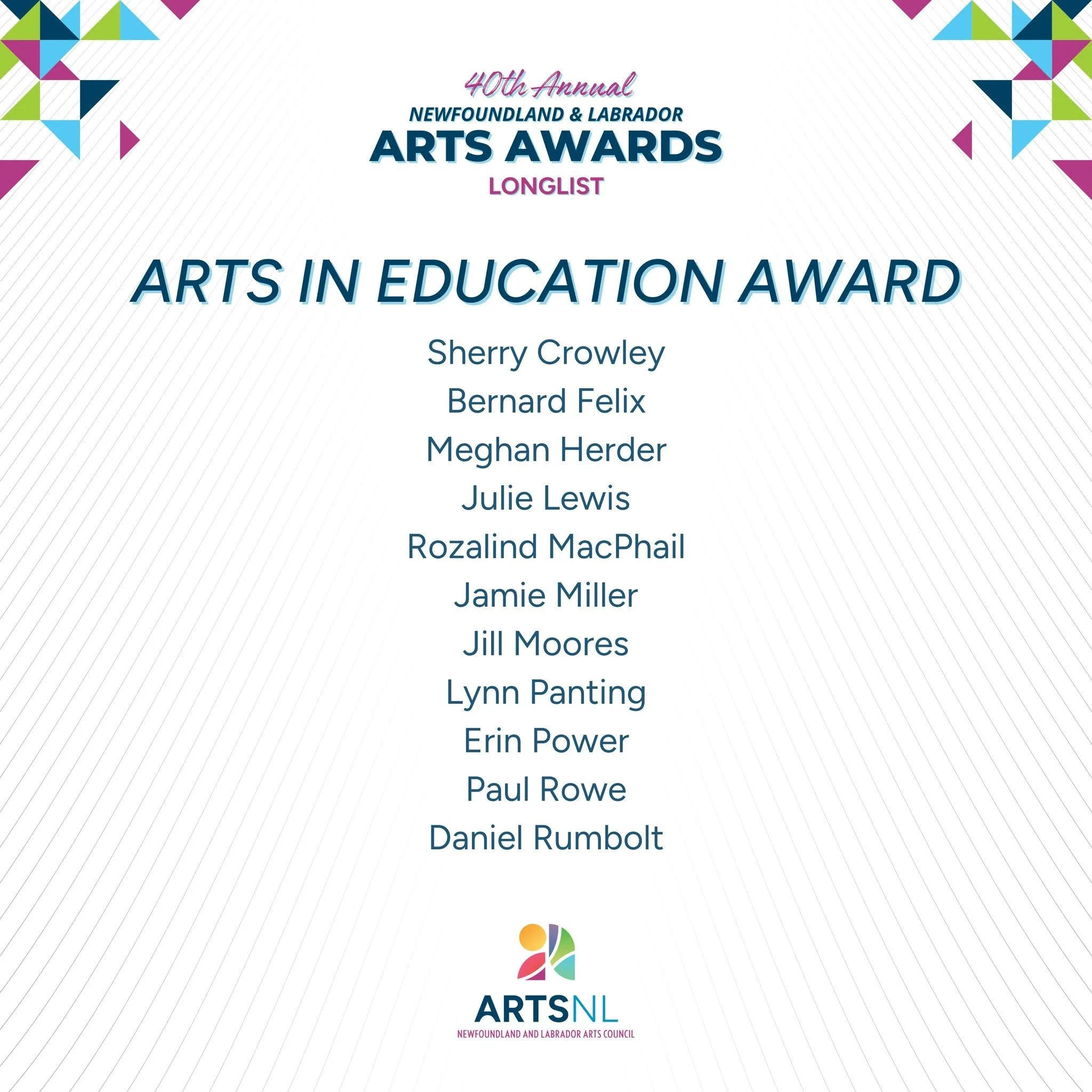
I’m honoured to share that I have been long-listed for ArtsNL’s Arts Educator of the Year Award. While recognition is not the reason any of us choose this profession, moments like this create an opportunity to reflect on the ecosystem that makes it possible.
Across Newfoundland and Labrador, arts educators are quietly doing the daily labour of building confidence, shaping creative literacy, and nurturing the next generation of artists, collaborators, leaders, and community members. I want to extend my genuine congratulations to everyone on this year’s long list. It is a privilege to stand alongside colleagues whose practices are thoughtful, rigorous, and deeply rooted in care.
Every day, I witness the ways arts education strengthens individuals and communities: how it teaches young people to collaborate, to lead with empathy, to listen, to respond, to imagine boldly, and to take up space with integrity. The arts shape how people understand themselves and the world around them. That impact is structural, cultural, and profoundly human.
This recognition also prompts a larger conversation about visibility. Much of the work of teaching happens out of public view. The planning, the mentorship, the emotional labour, the navigation of boundaries, the creation of safer spaces, the stewardship of emerging voices. These practices are not often celebrated, yet they form the backbone of a sustainable arts sector.
When we talk about strengthening our cultural ecology, we are also talking about supporting the educators who make that ecology possible. Strong arts education is a form of cultural infrastructure. It feeds our stages, our festivals, our creative industries, and our communities. It ensures that the next generation not only has the skills to create work, but also the capacity to collaborate, innovate, question, and contribute meaningfully to the public good.
I’m grateful to ArtsNL for recognizing the essential role of arts educators, and grateful for the opportunity to be in conversation with peers whose practices push our community forward. Recognition, in this sense, becomes not just a personal milestone but a moment to reaffirm our shared commitment: to thoughtful pedagogy, to creative rigor, to equity, to experimentation, and to the ongoing work of building responsive, human-first spaces for artists of all ages.
To my fellow nominees: thank you for the work you do. Your impact travels farther than you know. Our sector is made stronger by your presence.
A Call to Action: Supporting the Future of Arts Education
If this long listing underscores anything for me, it’s how deeply our sector relies on educators and how we need collective action to support them.
Here are a few ways individuals, organizations, and institutions can strengthen arts education in Newfoundland and Labrador and beyond:
1. Advocate for sustained funding.
Write to your MHA, school board, or municipal leadership about the importance of arts education. Public investment matters, especially in a shifting political landscape.
2. Champion arts educators publicly.
Share the work of educators in your networks. Celebrate their milestones. Visibility helps shift narratives and funding priorities.
3. Create paid opportunities for artists to teach.
Workshops, residencies, mentorship programs, and youth initiatives all benefit from professional facilitation.
4. Amplify access.
Support organizations that commit to reducing barriers for young people and emerging artists.
5. Build partnerships.
Arts education is strongest when schools, artists, community groups, and cultural institutions work together.
The health of our arts ecosystem depends on ongoing, intentional investment in teaching and mentorship. If we want a vibrant future for the arts, we must nourish the people doing this work today.

On Scarcity and the Arts
Scarcity tells us there isn’t enough to go around. It convinces us that someone else’s success means less for us. It tempts us to tighten our grip and protect what we’ve built, often at the expense of community.
The political landscape has shifted, and that shift is palpable.
Make no mistake: economic and cultural contraction is reshaping the arts at an alarming rate.
Funding pools are smaller. Costs are higher. Everyone is tired, and the group chat has gone quiet.
In times like these, it is tempting to retreat to one’s own corner and resource guard. It is a scary time for artists and arts organizations, and as a result, it’s easy to adopt a scarcity mindset.
Scarcity tells us there isn’t enough to go around. It convinces us that someone else’s success means less for us. It tempts us to tighten our grip and protect what we’ve built, often at the expense of community.
It’s a very human response, but I would argue that it ultimately doesn’t serve us.
Scarcity mindset keeps us small. It isolates us. It erodes trust. When we operate from fear, we stop sharing ideas, spaces, and opportunities. We stop imagining new ways forward.
So what is the alternative?
Community.
Listen, I am a second-generation artist. I am not ignorant to the impacts of a downturn. The financial repercussions of COVID nearly did me in, and I am only now starting to recover. I am not suggesting that we Pollyanna our way through. I am suggesting that we start recognizing and fostering the idea that the arts are an ecosystem.
Art cannot be made in isolation. Art invites. Art reflects.
Somewhere along the way (perhaps around the same time we adopted the term “arts industry”) we started treating the arts like a hierarchy instead of an interconnected ecosystem.
In an ecosystem, there is reciprocity. Diversity of scale, approach, and audience strengthens the whole. Small, mid-size, and large organizations each play essential roles, feeding one another through shared audiences, mentorship, and experience.
An industrial/hierarchical model, on the other hand, rewards bigness. It prizes scale and revenue over relationship. But the truth is, not everyone can (or should) be big. A top-heavy system is inherently unsustainable.
If we only reward the most seasoned, the highest earning, the most recognizable, where will our next generation of artists come from? How will they find the footholds they need to grow?
Further where does that leave newcomers, independent artists, and those from marginalized communities?
When success is defined by scale, we risk flattening the very diversity that makes our sector resilient.
In truth, size and budget do not necessarily correlate to impact. I’m sure we can all think of an example or two of a big-budget endeavour that didn’t yield good art. And vice versa, I can think of plenty of small and mighty projects that did.
Big, small, and everything in between is necessary.
So what do we do?
Resist scarcity.
Communicate. Keep the channels open. Share what you or your organization is facing
Share knowledge, space, and tools, even when we feel stretched.
Partner.
Trust that generosity can coexist with ambition.
Remember that our survival relies on the survival of others.
We can still advocate for systemic change, for better funding models and sustainability. Isn’t it best that we do that together?
There is room for all.

The Myth of the Infinite Artist
We’ve absorbed the corporate work week and intensified because the art must be made and there’s never enough time, money, or stability to question the pace.
Somewhere along the way, the arts adopted the worst habits of corporate culture and made them more brutal.
We built a system where working yourself to the edge is a badge of honour and gratitude has twisted into a silencing mechanism.
The Culture of the Room
If you’ve ever worked on a professional show, you know the pace. Two to three weeks of six-day rehearsal weeks. Tech runs that stretch to ten hours inside twelve. Entire shows built and mounted in less time than it takes most offices to plan a quarterly meeting.
Unions allow this.
Funders expect it.
We, the artists, endure it.
Even outdoor theatre (where there isn’t even a lighting cue to justify the hours) still follows the same schedule, because that’s just how it’s done.
And film? Film is even worse!
We’ve absorbed the corporate work week and intensified because the art must be made and there’s never enough time, money, or stability to question the pace.
Gratitude and Scarcity
Artists are trained to be grateful for opportunity. Gratitude is part of our DNA. We love what we do, and we know how lucky we are to do it. But that gratitude often gets twisted into compliance.
Funding is limited. Resources are scarce. So we internalize the belief that rest is indulgent and that asking for care is unprofessional.
The result is a scarcity mindset that seeps into our rehearsal culture.
When everyone in the room feels like they’re replaceable, we stop protecting our energy, our bodies, and our imaginations.
What Real Artistry Needs
We are not infinite. We’re human. And real artistry comes from humanity, not depletion.
Creativity comes from time to observe, to think, to question, to play and to connect.
Creativity needs rest, nourishment, and perhaps most of all, perspective. It needs rooms where care is implicit. Where the goal isn’t to squeeze every drop of brilliance out of a body in three weeks and discard them, but to build an environment where artists can sustain a lifetime of making.
Resisting Urgency
The real way to resist urgency is through transparency.
So much of what drives exhaustion in our field is the unspoken: the quiet assumption that artists will just make it work. A mantra, I myself have employed many times.
There is an assumption that we will meet impossible expectations because we care too much not to.
For Artists
As artists, we can start by being honest about what’s possible. About the energy we have, the limits of our focus, and the time creation truly needs.
We can ask questions before saying yes. We can clarify expectations early, and we can name when the workload feels unsustainable.
We can model transparency:
“I need a break to do this well”
“I can meet that goal, but I’ll need an extra day”
It challenges the idea that professionalism means endurance at any cost.
And those with privilege have an added responsibility to model this publicly. Transparency from the top gives permission to everyone else in the room to be human, too.
For Leaders and Producers
Transparency is also leadership.
When we’re clear about capacity and expectations, we make healthier rooms.
Be upfront about what’s possible with the budget and timeline.
Don’t assume people will overextend themselves to make it happen.
If you’re asking for more, say that you’re asking for more and explain how you’ll accommodate it.
Model sustainability wherever you can. Run five-day weeks instead of six. Build recovery days into schedules. Offer relief where possible. Acknowledge the human cost of urgency instead of pretending it doesn’t exist.
When leaders are transparent, artists can plan their energy. When artists are transparent, leaders can plan with care.

You’re Not the Underdog Anymore: Building Systems That Make Truth-to-Power Possible
You can hold power and still struggle. You can have authority and still feel uncertain. Power doesn’t erase effort or hardship; it shifts what responsibility looks like.

Photo of Sally: a short queen, but no underdog.
Power is on my mind.
It’s one of the concepts that continues to surface in my training and practice in consent-based work and intimacy direction, and it’s one that I am acutely aware of in life.
A reminder here that power is intersectional. Our identities shape how we hold power and how it’s received, and we cannot ignore the imbalances that affect historically marginalized groups.
I’ve written about the obliviousness of power and the false underdog narrative that permeates many arts spaces.
If you work in the arts, if you have a voice, if you get booked, you are no longer the underdog. And that realization can feel uncomfortable. It can unsettle the identity and narrative you’ve built for yourself.
Many of us experience imposter syndrome, and that can make it hard to square our self-perception with the power we actually hold.
There can also be a kind of cognitive dissonance at play: we equate power with ease, and because our work is difficult and underfunded, it feels impossible that we have any power at all.
But those things are not mutually exclusive. You can hold power and still struggle. You can have authority and still feel uncertain. Power doesn’t erase effort or hardship; it shifts what responsibility looks like.
Types of Power
Systems of power were a major focus in my training with IDC (Intimacy Directors & Coordinators). Their foundational reference outlining the types of power is “The Bases of Social Power” by French and Raven. I offer their summary here, as it might be helpful.
Legitimate power, which I often call “title power”, comes from a formal role or position within a hierarchy: producer, director, etc.
Reward power is the ability to grant benefits, incentives, or recognition to others.
Coercive power is its mirror, the ability to withhold, punish, or threaten negative consequences.
Expert power comes from specialized skill, knowledge, or competence.
Referent power comes from admiration, trust, and personal connection.
Informational power comes from control or access to key information, narratives, or framing.
In my experience, referent and informational power are the most prevalent forms of power in our community. They’re also the ones people are least likely to recognize in themselves.
In small or interconnected arts environments, relationships, trust, and access to information can hold more influence than titles or budgets.
Practicing Power with Care
If you hold power and you believe in fostering better work environments, you have to create and maintain systems that allow for truth to power.
Normalize feedback, don’t dramatize it.
Make feedback routine and low-stakes.
Ask for it.
Model it.
A simple “How did that land?” or “What would make that easier next time?” goes a long way.
Build structures that separate safety from hierarchy.
Create channels where honesty doesn’t have to move through the chain of command. Use anonymous feedback forms or regular third-party facilitation.
A note on “company advocates.”
In theatre settings, the role of company advocate has become increasingly popular. A company advocate is a peer-designated point person for performers to bring concerns to, who then relays them to title power.
While the intention behind it is good, I am wary of the structure.
First off, the position is unpaid.
Next, this role often results in trauma dumping on one individual who may not have the skill set or resources to manage that kind of emotional labour. It can also unintentionally undermine the established systems that should already exist: the work of the stage manager or the necessity of having HR.
Truth-to-power should be systematized, not individualized. An anonymous feedback mechanism or a clear, transparent reporting structure requires far less emotional labour than assigning unpaid, untrained care work to a fellow cast member.
Be transparent around decision-making.
One of the quietest forms of coercive power is opacity. Make your reasoning visible. When people can see how and why a decision was made, even if they disagree, they become part of the process.
Collaborate and listen.
If you’re leading a project, invite meaningful collaboration early in the process.
Give credit to your collaborators publicly.
When someone tells you their experience, listen without defending.
Treat care as infrastructure.
Care is a system. Your policies, timelines, budgets, and boundaries reflect your values.
How we build systems of care is how we build trust.

Choosing Your Way Forward After a Bad Experience
The way you process a bad experience can deeply impact how you carry yourself into your future work. Whatever choice you make, it’s important that you make it consciously.

So, you’ve had a bad experience. What next?
When something goes wrong in a project, the two obvious choices often presented are:
Tackle it head-on.
Ignore it and move on.
But I want to offer another frame: becoming an active participant in how you move forward.
The way you process a bad experience can deeply impact how you carry yourself into your future work. Whatever choice you make, it’s important that you make it consciously.
Time and Space
The first step is to give yourself time and space. A cooling-off period allows you to process not just what happened, but how it affected you. For me, that processing involves two different but equally important lenses:
Facts:
What happened?
What went wrong?
What was my responsibility?
What was not my responsibility?
What would I do differently next time?
Feelings:
How did this make me feel?
Why was I triggered?
What patterns does this bring up?
How can I protect myself from this in the future?
This combination helps me move through reflection in a grounded way. The goal is not to bypass emotions nor to drown in them.
No Response Is Still a Response
Once you’ve done your own inner work, you may choose not to address the situation directly. That is deeply valid. It can be a powerful choice to protect your energy and redirect your attention toward work that nourishes you.
No response is a response.
If You Choose to Address It
If you decide to raise the issue with a producer, director, or collaborator, know that it is trickier terrain. I recommend extra time and space before acting.
Even if you choose to address the situation through an in-person conversation, I strongly suggest writing down your talking points first. Time, space, and editing are your allies here.
Once you have a message that is carefully crafted and not impulsive (my first instinct is my worst instinct, thanks anxiety), I also recommend sending it in writing. The person you’re addressing may not be able to receive your message in the moment, but having it in writing gives them the opportunity to revisit it when they are ready.
Some questions to clarify before you begin:
Do I want to invest in a relationship with this person or company? If so, why? Perhaps share that with them.
Do I need to keep the door open for collaboration? Is there a practical conern here?
Or is it okay if this person steps out of my orbit?
The answers will help you decide if the risk and work of speaking up is worth it.
A Note on the Obliviousness of Title Power
In the last five years, I cannot count how many times a person of title power has been oblivious to how bad an experience was for everyone else.
This is deeply frustrating to me, and I think it speaks to the inherited colonial and capitalist systems that the performing arts has adopted.
At the end of the day, we can only control ourselves. As much as I may want to shake someone and make them see what is happening in real time, that is not my responsibility, nor is it yours.
What is reasonable is for those in positions of power to put systems in place so that truth-to-power is part of everyday practice.
It is also on all of us to reflect on our behaviours in the room and seek tools to strengthen our emotional intelligence. Therefore, when feedback comes (whether through direct words, non-verbal cues, or even silence), we are ready and willing to receive it.
Moving Forward
Ultimately, there’s no single “right” way to respond. What matters most is that you take time to process and take ownership of your choice.
By actively deciding, you close the chapter on a difficult experience and lay the groundwork for future projects.
Building a Responsive Ensemble
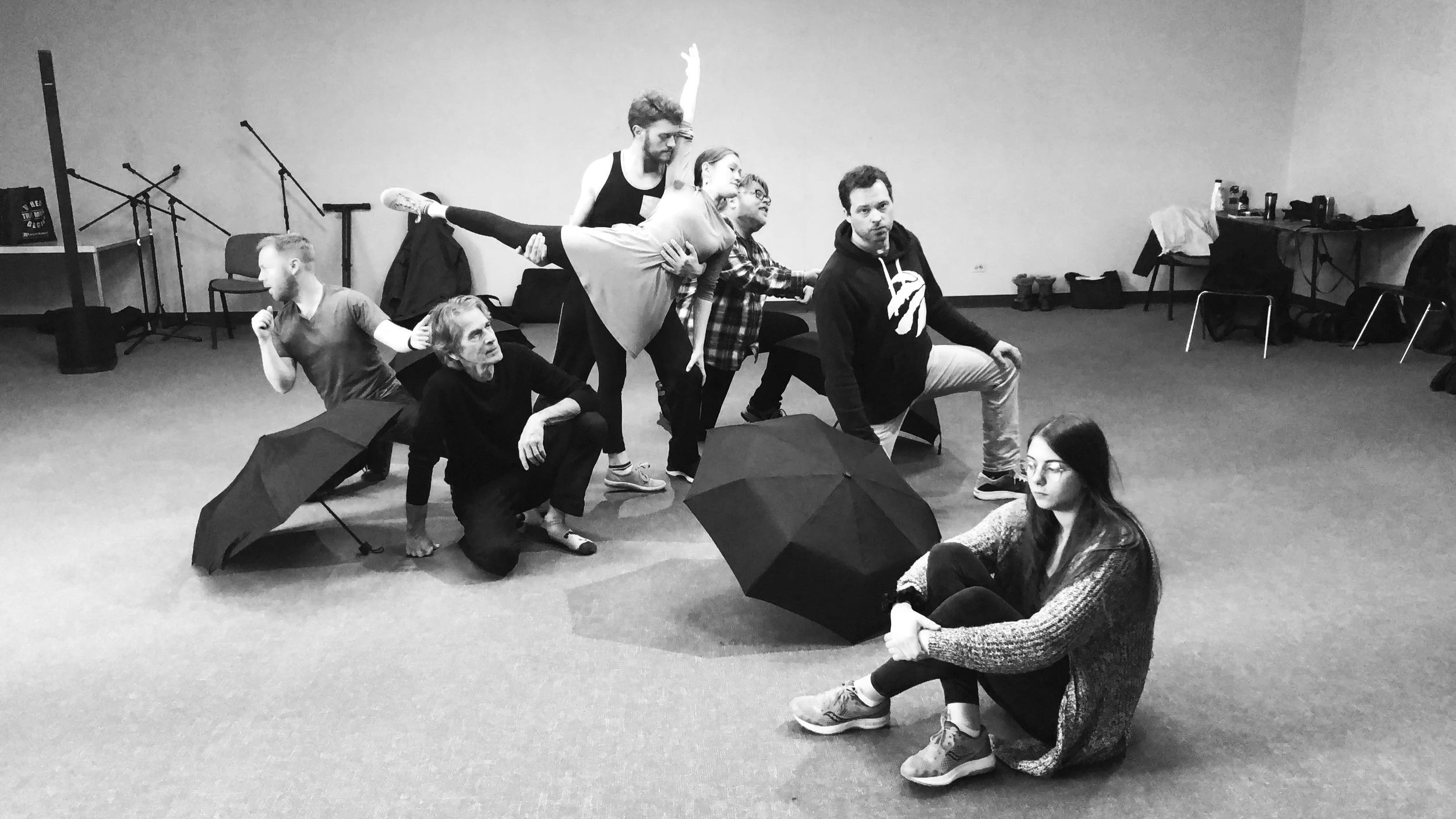
Introduction to Responsive Ensemble Framework was delivered in partnership with St. John’s Shorts and Untellable Movement Theatre, focusing on how ensemble building can be responsive, collaborative, and rooted in the strengths of the people in the room.
Workshop of 11:11, 2020
Introduction to Responsive Ensemble Framework was delivered in partnership with St. John’s Shorts and Untellable Movement Theatre, focusing on how ensemble building can be responsive, collaborative, and rooted in the strengths of the people in the room.
My process is rooted in movement because that is my entry point and expertise. About half of what I bring into the room are exercises I have refined over 20 years, practices I know will work across all groups, abilities, and entry points. The other half is created in direct response to the production itself, the specific people in the room, the nature of the show, and the objectives of my role. That responsiveness is key because it ensures that the ensemble-building process is never a one-size-fits-all template but a living, collaborative approach that meets the unique needs of each project.
What We Did
The workshop began with a movement exercise called Stand, Sit, and Lie, exploring connection, proximity, and speed. We then worked with non-contact gestures to explore dynamics between individuals. The final activity was a case study based on participant suggestion, experimenting with space, duration, time, and the concept of the evolution of man.
Additional topics included:
Spaces that thrive because of aligned values
The creation of memory through movement
Communicating with actors in an ensemble environment
How ensembles lead to more information sharing than a more traditional hierarchical structure
Bringing your whole self to the table as a collaborator
Four Key Ideas from the Session
1. Understand that this only works in a collaborative environment.
A responsive ensemble thrives on shared authorship and open communication. If the process is overly hierarchical, the space for creative exchange shrinks, and the benefits of this approach are diminished.
2. Ground the ensemble in your own strengths and experience.
Begin with methods you know will work, ones that have proven effective in building connection and trust. Use these as the foundation, then build outward with exercises and explorations tailored to the production.
3. Learn how to watch the room.
Notice the dynamics that emerge. Who thrives on clear boundaries? Who is quieter in a group setting? What chemistries are forming? Where is there friction? This information is invaluable and can be applied in real time to avoid tender spots and to lean into each person’s strengths.
4. Be responsive.
Every production has its own rhythm, needs, and personalities. Adapt the process to the specific individuals and circumstances rather than applying the same structure to every situation.
Saying Goodbye: Rituals and Reflections for the Post-Show Blues
We don’t always talk about or process endings in theatre. We rush head first into the next thing. But I think endings are important and how we say goodbye matters.
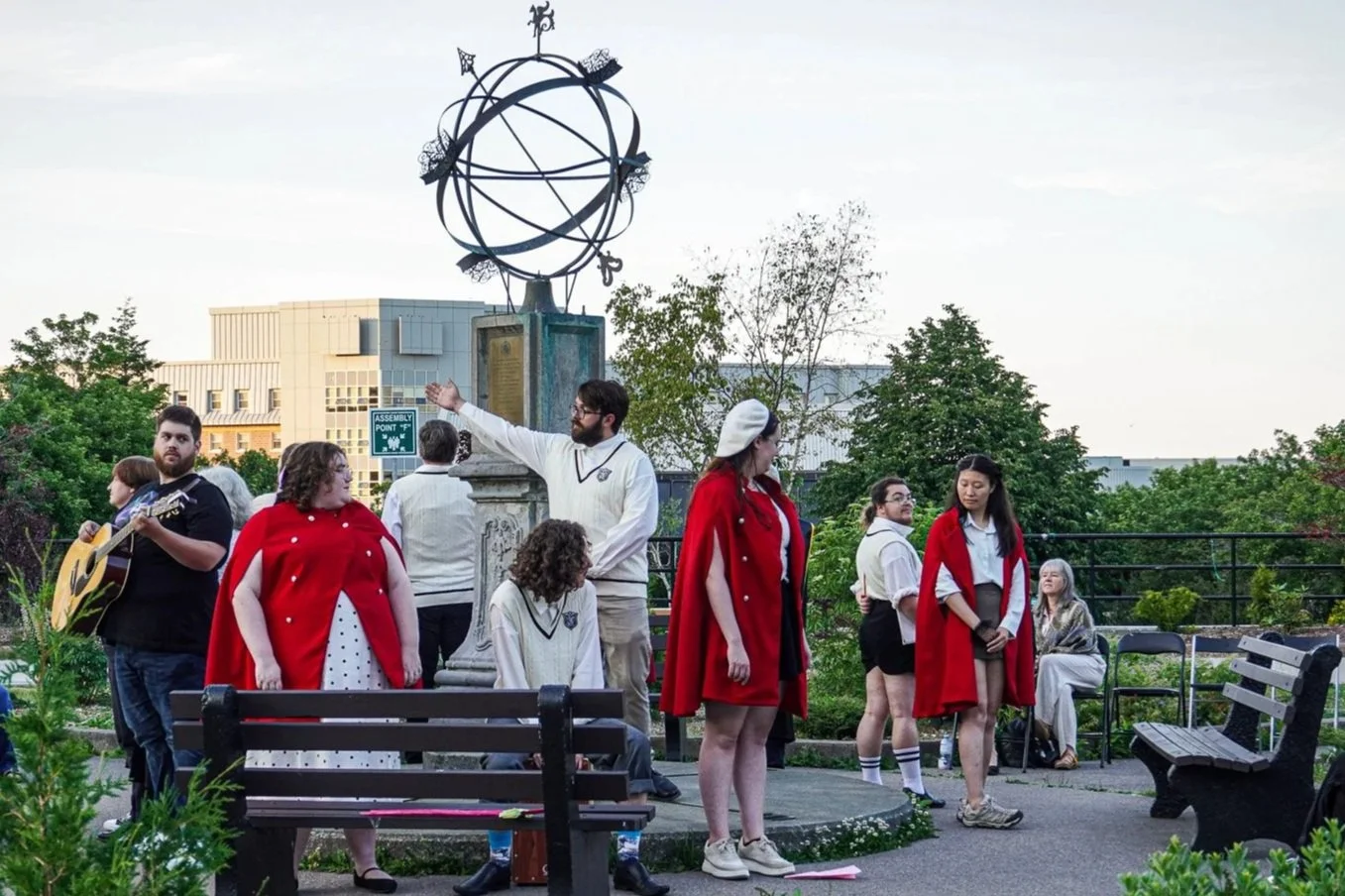
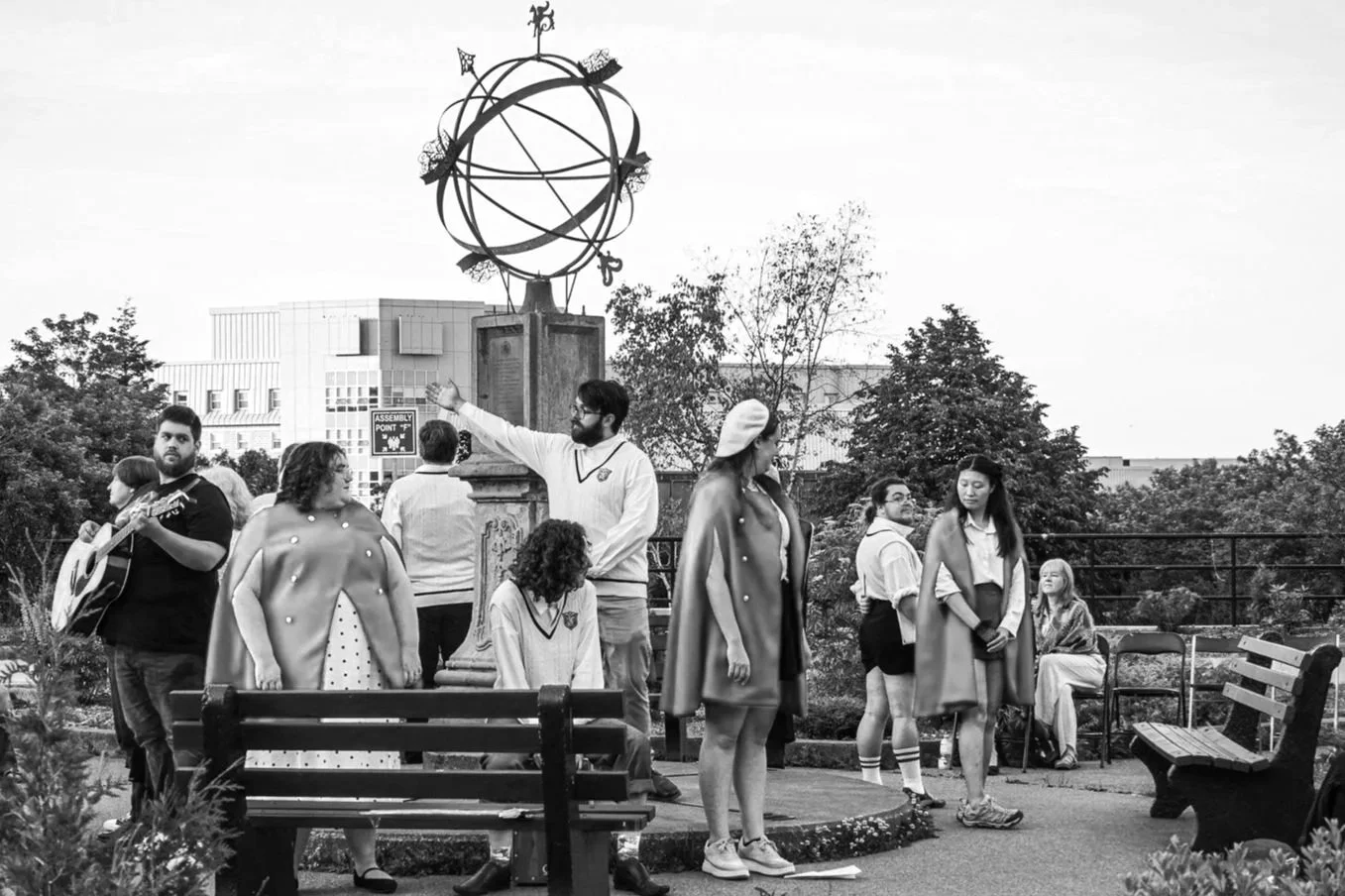
Love’s Labour’s Lost, SBTS, 2025
Love’s Labour’s Lost (LLL) closed yesterday. My experience with the show was deeply joyful from start to finish. My heart is full and I am so very proud. We built something generous, alive, and silly in all the right ways.
But here I am on Monday and the heaviness of post-show blues has arrived right on cue.
We don’t always talk about or process endings in theatre. We rush head first into the next thing. But I think endings are important and how we say goodbye matters.
In a very meta turn of events, to help me say farewell to LLL, I’ve created a post-show reflection guide. It's designed to help artists process the end of a project and honour their experience.
Curtain Call: Post-Show Reflection
For the Joyful Shows
1. What surprised you?
What did you not expect to love as much as you did?
2. What made this process joyful?
Consider people, values, structure, setting, tone, or anything else that felt nourishing.
3. What did you learn about yourself as an artist?
How did this process affirm your skills, growth, or the way you show up in the room?
4. What do you want to carry forward?
Name something you want to bring into your next project.
5. Who are you grateful for?
List names. You don’t have to share it. Just notice what you notice.
6. What’s one memory you never want to forget?
For the Difficult Shows
1. What was hard?
Name it.
2. What do you wish you had known sooner?
What would have changed your choices or boundaries?
3. What was not your responsibility?
Name it and release it.
4. Where did you show up for yourself?
5. What do you need to leave behind?
6. What boundary do you want to carry forward?
Put this is your notes app!
Suggested Closure Rituals
Write a letter to the cast, the show, or yourself.
Create a closing playlist.
Archive the moment. Make a folder: photos, reviews, inside jokes, something you can revisit.
Say it out loud:
“I loved this. I’m letting it go.”
“This was hard. I’m leaving it behind.”
“This changed me. I’m carrying it forward.”
What’s Next?
How will you show up for the next project?
How do you want to feel?
What do you have to offer?
What kind of room do you want to be in?
What kind of art do you want to make?
Who do you want to be in community with?
A Note from Me
Much of this closure work is personal, and I’ll be keeping most of my reflections private. But I will offer this, LLL affirmed something I continue to learn: To do my best work, I need to be in a room where values are aligned.
I’m also leaving this process with a renewed love for community theatre. I think it is the most important kind of theatre we have. It builds connection skill and empathy in a way that is deeply rewarding and unparalleled in “professional” work.
Much love, LLL. What a gift you were and are!

On Corporatization of the Arts
We risk narrowing the field to what is already familiar and profitable. That’s not a “new” business model. That’s capitalism.

I am worried about the arts.
Not just in the familiar way we worry during a recession, but in a deeper, more insidious way.
I am wary of the word “industry” in relation to the arts in general, and specifically, its association with non-profit arts organizations.
I’m worried about how we’re shaping culture to fit funders.
I’m worried about the corporatization of the arts.
Professionalization vs. Corporatization
Let me be clear: professionalization in the arts is essential. It means artists get paid. It means sustainable careers, safe working conditions, and accountability. Professionalization is, at its core, about equity. It recognizes that art = work.
Corporatization is different. It’s not about valuing artists, it’s about reshaping art and artists in the image of the corporate world. It’s about metrics over meaning, and it’s showing up everywhere: in language, values, programming, and policies.
More and more, we are reshaping culture to fit funders, not the other way around. We’ve started building institutions not to serve art or community, but to attract investors.
Relevance
The Audacity of Relevance: Critical Conversations on the Future of Arts and Culture by Alex Sarian is very hot with arts leaders across the country right now. Sarian suggests we must embrace a “new business model” and give audiences what they want.
And sure, art should be relevant. But relevant to whom? And on whose timeline?
When “relevance” means chasing the tastes of the majority, we risk erasing marginalized voices. “The audacity of relevance” is also the “audacity of whiteness” and certainly the “audacity of wealth”.
Further, we risk narrowing the field to what is already familiar and profitable. That’s not a “new” business model. That’s capitalism.
Art is not always immediate; it does not always hit right away. Some of the most transformative work was ignored in its time. If we only support what’s trending or legible to the mainstream in real time, we cut off the future before it begins.
Plus, Monoculture is fragile. A healthy arts ecosystem is not a popularity contest. It needs the weird, the small, the slow, and the edgey. It needs multiplicity.
Go Big or Stay Home
The corporatization of the arts shows up in funding structures, too. With ArtsNL’s shift to the Professional Operating Program, many smaller organizations were pushed out of annual funding and into project grants, where they now compete with individual artists.
The project grants budget didn’t grow, but the pool did. This change doesn’t nurture a diverse ecosystem; it rewards scale.
If we continue down this path, we’ll lose the very voices that make the arts matter in the first place.
What Can We Do?
I think we can start by naming it.
Let’s talk about corporatization openly in the community, in grant reports, with our boards, and with our funders. Let them know that we see what’s happening.
We can ask hard questions:
Who benefits from this model?
Who gets left out?
We can support the small, the weird, and the independent. We can buy tickets. We can share the work. We can say their names in rooms they’re not in, better yet, advocate to get them in those rooms.
We can advocate for diverse funding structures. Structures that don’t pit artists against one another.
We can resist the pressure to justify our worth in corporate terms and understand that value and metrics are not synonymous.

What Is an Intimacy Director and What Should You Expect in the Rehearsal Room?
As someone who primarily works in theatre, I often get questions like:
"What exactly is an Intimacy Director?"
"Do I need one for my show?"
"What can actors and directors expect from that process?"
This blog is a guide to how Intimacy Direction works in live theatre, and what it can look like for actors, directors, stage managers, designers, and producers.

As someone who primarily works in theatre, I often get questions like:
"What exactly is an Intimacy Director?"
"Do I need one for my show?"
"What can actors and directors expect from that process?"
This blog is a guide to how Intimacy Direction works in live theatre, and what it can look like for actors, directors, stage managers, designers, and producers.
What Is an Intimacy Director?
An Intimacy Director (ID) helps stage scenes involving:
Kissing or physical intimacy
Simulated sex or undressing
Power-based dynamics (like abuse or coercion)
Emotional vulnerability
Much like a fight choreographer or dialect coach, the Intimacy Director creates a safe structure for storytelling. The ID works with the cast and creative team to stage intimacy clearly and repeatably, making sure that every person involved feels informed, empowered, and supported.
What Happens in Rehearsal?
Pre-Production Conversations
Before rehearsals begin, the Intimacy Director meets with the director and/or creative team to:
Understand the themes, tone, and goals of the play
Clarify what intimacy is in the script and where it lives in the story
Discuss safety protocols and support for actors
Establishing Consent Culture
The ID may lead a consent-based warm-up or workshop with the cast to:
Introduce shared language (like “closed rehearsal,” “consent to touch,” etc.)
Teach basic tools for giving and withdrawing consent
Help everyone learn how to say “yes,” “no,” or “not right now” without fear or shame
Choreographing Intimacy
Just like dance or stage combat, intimate scenes are blocked and rehearsed step by step. The choreography is:
Specific
Repeatable
Based on agreed boundaries
Designed to tell the story
Integration with the Show
The ID collaborates with the director and actors to make sure the scene fits tonally and serves the play. The ID may also work with designers, wardrobe, and stage management to ensure modesty garments, lighting, and transitions support the intimacy safely.
During the Run
Even after the show opens, the ID’s role doesn’t stop:
They may attend previews or early performances
Stage management is trained in how to maintain choreography and consent boundaries, but boundaries may change and the ID must be prepared to re-choreograph
A “consent check-in” may happen before each show or after any performance where something felt “off”
Why Use an Intimacy Director?
An ID helps create:
Safer rehearsal rooms
More sustainable processes for actors
Clearer storytelling for audiences
Reduced risk for producers and organizations
Just like we wouldn’t ask actors to choreograph their own sword fight, we shouldn’t expect them to navigate intimacy without support.
Intimacy Direction isn’t about limiting artistic freedom. It’s about building trust, structure, and communication so that everyone in the room can do their best, most honest work.

Intimacy Coordination for TV & Film: What to Expect
Although my intimacy practice is mostly grounded in live theatre, I do occasional work in film and television and I’m often asked: What exactly does an Intimacy Coordinator do on a film set?
This blog is a simple, straightforward guide to answer that question. Whether you’re a producer, director, actor, or just curious about best practices, here’s an overview of how intimacy coordination works on screen.

Although my intimacy practice is mostly grounded in live theatre, I do occasional work in film and television and I’m often asked: What exactly does an Intimacy Coordinator do on a film set?
Whether you’re a producer, director, actor, or just curious about best practices, here’s an overview of how intimacy coordination works on screen.
The protocols shared here are based on guidance from SAG-AFTRA, ACTRA, and IDC (Intimacy Directors and Coordinators) training, which have set the industry standard for working with scenes involving nudity, simulated sex, or emotionally vulnerable content.
What Is an Intimacy Coordinator?
An Intimacy Coordinator (IC) is a trained professional who helps choreograph and support intimate scenes for film and TV. Their job is to make sure everyone involved feels safe, respected, and informed, while helping directors and producers achieve their creative goals.
ICs handle the logistics, advocate for performers, and ensure consent and communication are at the core of every step. Just like a stunt or fight choreographer, the IC works to plan, rehearse, and supervise scenes where actors are physically or emotionally vulnerable.
Before Filming: What Happens?
Intro Meetings
The IC connects with the director, producers, and ADs to:
Review the script and flag any scenes requiring intimacy support
Clarify how each scene will be shot
Discuss safety and closed-set protocols
Performer Check-ins
Each actor involved in an intimate scene will meet privately with the IC to:
Go over the scene in plain terms
Talk through personal boundaries and preferences
Learn about modesty garments, barriers, and privacy measures
Ask questions or voice concerns
Nudity & Simulated Sex Riders
For scenes involving nudity or simulated sex, a written agreement (rider) outlines exactly what’s been agreed to. These must be:
Finalized and approved by the actor (and/or their agent)
Delivered at least 48 hours before shooting
Signed before the scene is filmed
Wardrobe & Makeup Coordination
The IC consults with wardrobe and makeup teams to ensure all modesty wear, prosthetics, and coverings are available and fitted respectfully.
On Set: What to Expect
Private Check-Ins
The IC will check in with each actor privately before the scene, ideally in their dressing room or a quiet space, to confirm continued consent.
Choreographed Rehearsal
Intimate scenes are never improvised. The IC helps choreograph every physical beat, just like blocking a dance or fight. The goal is clarity, consistency, and comfort.
Closed Set Protocols
On the day of filming:
Only essential personnel remain on set
No visitors, cell phones, or extra monitors
Actors are covered immediately after each take
The IC stays close by to check in and adjust as needed
Ongoing Consent
Actors are encouraged to check in with each other between takes. The IC is available to confirm consent and manage any changes. If something shifts that wasn’t in the original rider, a new one must be created and the 48-hour window restarts.
After Filming: Privacy & Protection
Once the scene is shot:
Footage is labeled “Restricted Access” and only available to essential editing staff
All material is stored securely and used only for the intended production
Why It Matters
When an Intimacy Coordinator is on set, you can expect:
Respectful working conditions
Clear communication
Creative solutions that support both the story and the people telling it
Actors can focus on their performance without second-guessing their safety. Directors and producers get reliable, repeatable results. And the work ultimately becomes stronger, safer, and more sustainable.
What Else Can an Intimacy Coordinator Support?
While much of the public conversation around intimacy coordination focuses on scenes involving nudity or simulated sex, an IC’s role can extend far beyond that. In both live performance and screen work, intimacy involves any moment of heightened vulnerability, personal exposure, or physical proximity.
Some additional areas where I provide support include:
Kissing & Non-Sexual Touch
Even a simple kiss or hug can bring up questions of consent, comfort, and repetition. I work with performers and directors to choreograph moments of touch with intention, ensuring clarity and consistency throughout takes or performances.Family Dynamics & Power Imbalance
Scenes involving parent-child relationships, emotional manipulation, grief, or caretaking can require as much care as scenes of intimacy. I help teams navigate the physical and emotional boundaries that arise when portraying closeness, conflict, or trauma.Managing Physical Boundaries in Ensemble Work
Close contact in group scenes can be overwhelming or uncomfortable. I support casts in creating clear agreements and shared language for safe touch, spacing, and body autonomy.Developing Consent-Based Culture
I support creative teams in embedding consent into the process itself, not just the product. That includes warm-ups, boundary check-ins, and room agreements.Supporting Performer Wellbeing
My presence signals that there is a dedicated, neutral advocate available to help navigate discomfort.

To Check-In or Not to Check-In?
Let’s talk about check-ins.
In modern rehearsal rooms, the “check-in” has become a common practice. At its best, a check-in helps build trust, transparency, and connection. But when misused, it can derail a rehearsal, consume valuable time, or place too much emotional labor on others.

Let’s talk about check-ins.
In modern rehearsal rooms, the “check-in” has become a common practice. At its best, a check-in helps build trust, transparency, and connection. But when misused, it can derail a rehearsal, consume valuable time, or place too much emotional labor on others.
What is a check-in?
A check-in is a structured moment, usually at the start of rehearsal, where participants are invited to share something about their current state of mind, body, or capacity. The goal is to contextualize the room. To name how folks are entering the space.
Why do we check-in?
As we talk about check-ins, it’s important to return to the “why” because this is often what gets lost in the sauce.
The purpose of a check-in isn’t just to share how you're feeling. It’s to build awareness and as a segue to focus on the work ahead.
We check in to:
Build awareness. Knowing how your scene partner or crew member is arriving helps you work with them, not around them.
Make room for context. Someone might be quieter than usual, or more distracted, or totally lit up and naming it can prevent misunderstandings.
Ground the work. It’s a moment of collective pause before diving in. It helps shift into the work.
Ultimately, a check-in is a practice of accountability and care, it should serve the work and the people in the room.
When check-ins go off the rails
The success of a check-in depends entirely on the self-awareness and practice of the folks in the room.
I’ve been in rooms where a quick check-in was enough to shift the tone of the rehearsal for the better. I’ve also been in rooms where a single person (often in leadership) uses the check-in as a stage for trauma dumping/ oversharing/ grandstanding, thus derailing the rehearsal before it has even begun.
Check-in formats that might work for you
Here are a few check-in approaches that support clarity, connection, and care without overwhelming the room.
As you explore these, or design your own, remember that there’s no one-size-fits-all solution.
Context is everything. Consider who’s in the room, what kind of work lies ahead, and the “vibes” of that particular day. Be flexible. And always allow people the option to “pass” or opt out without explanation.
One Word
Prompt: “Share one word that describes how you’re arriving today.”
Best For:
Large casts or tight timelines
Setting a tone quickly
Early in a process when vulnerability may be low
Why It Works: It’s brief, revealing, and non-invasive. One word can hold a lot of information without oversharing.
I use this one as a check-out practice as well.
Color Check-In
Prompt: “What colour are you today, and why (optional)?”
Best For:
Creative/abstract groups
When you want emotional awareness without direct disclosure
Groups with mixed verbal confidence levels
Why It Works: Encourages metaphor and avoids direct language, making it accessible and expressive.
Weather Report
Prompt: “What’s your internal weather today?”
Best For:
Groups familiar with each other
Days with charged or heavy energy
Why It Works: Invites poetic imagery and gentle emotional framing without inviting problem-solving.
Capacity Rating
Prompt: “On a scale of 1 to 10, where is your energy or focus today?”
Best For:
Physically or emotionally demanding rehearsals
Tech week, long days, or overlapping commitments
Transparent capacity planning
Why It Works: Offers clarity without explanation, allowing leaders to adjust expectations or redistribute tasks.
Process-Oriented
Prompt: “What’s one thing you’re hoping to accomplish or focus on today?”
Best For:
Mid-to-late rehearsal periods
Task-heavy or goal-specific rehearsals
Groups already familiar with each other
Why It Works: Keeps check-ins directly tied to the work, which is especially helpful when momentum matters. It provides a point of focus.
Embodied Check-In
Prompt: “How is your body arriving today?”
(Optional: Pair with a gesture.)
Best For:
Movement-based work
Non-verbal or low-verbal rooms
Early morning rehearsals or after long breaks
Why It Works: Taps into physical presence, increases self-awareness, and can shift the group into their bodies.
In or Out
Prompt: “Are you in or out today. What do you need to get more in?”
Best For:
Intense or high-stakes rehearsals
Honest conversations about engagement
Work where emotional presence is essential
Why It Works: It invites agency and transparency, while giving people room to self-manage.
Private Check-In with a Visual Aid
Prompt: Provide cards or a chart with options like “low energy,” “excited,” “anxious,” “distracted,” etc., and allow participants to point or place a token.
Best For:
Neurodivergent participants
Trauma-informed spaces
Early in a process or in rooms where verbal check-ins are overwhelming
Why It Works: Offers non-verbal access to the same insights without public speaking.
Yes/No Check
Prompt: “Yes or no: I feel ready to start rehearsal.” Or “Thumbs up, thumbs down”.
Best For:
Days when you need to start fast
Times when the group feels unsettled
Why It Works: Extremely fast. Flags readiness or hesitancy without demanding explanations.
A note on boundaries and self-awareness
It’s vital to take care of your mental health outside the room and arrive ready to engage.
If you’re in leadership, model brevity and respect.
If you’re a participant, ask yourself: Is what I’m about to share helpful to the process, or am I seeking something else?
The best check-ins are about tuning in.
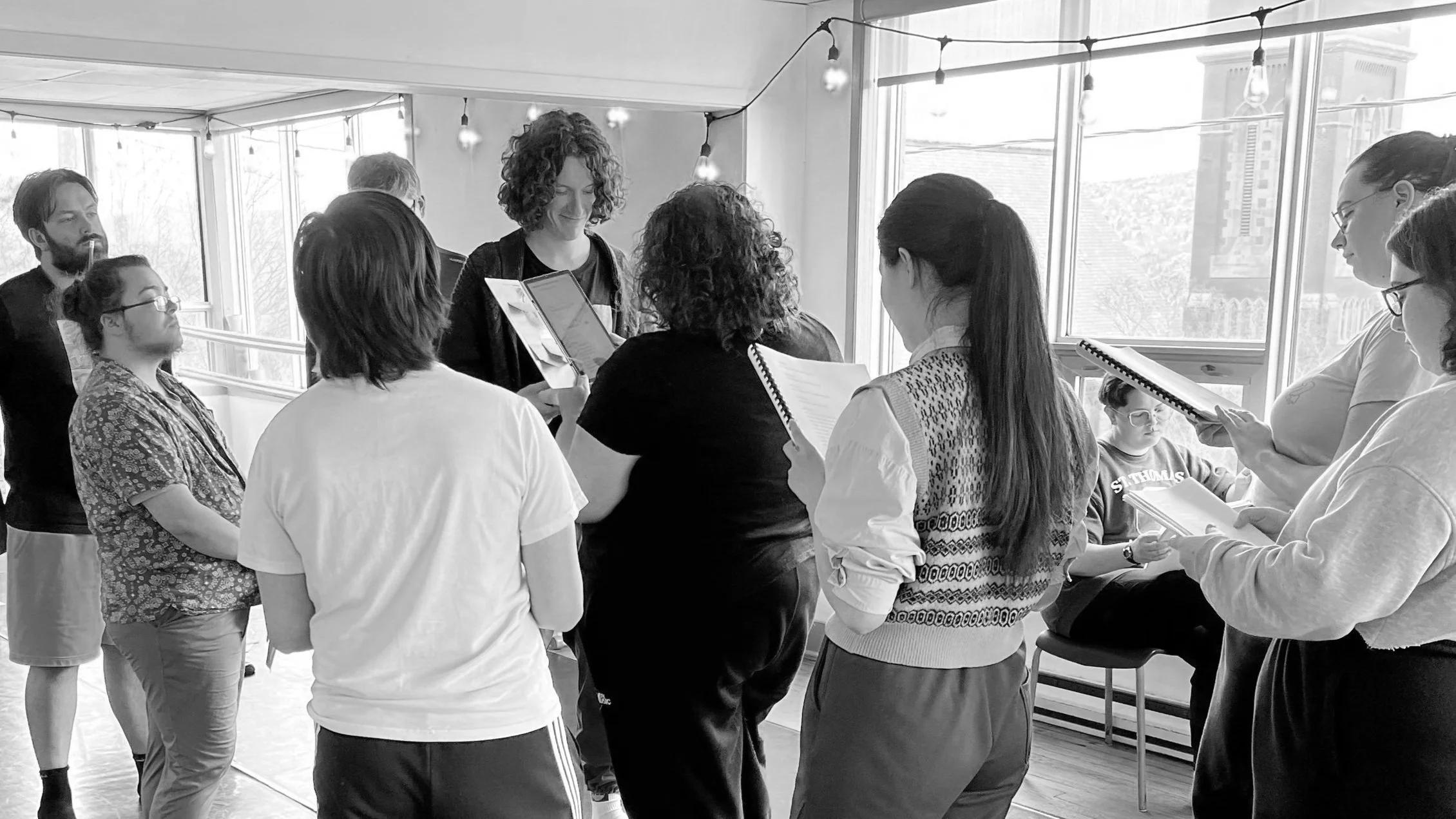
Rehearsing with Care: Best Practices for Consent-Based Rehearsal Culture
Rehearsing with Care: Best Practices for Consent-Based Rehearsal Culture was originally presented as part of a professional development session with Shakespeare by the Sea in partnership with Untellable Movement Theatre.
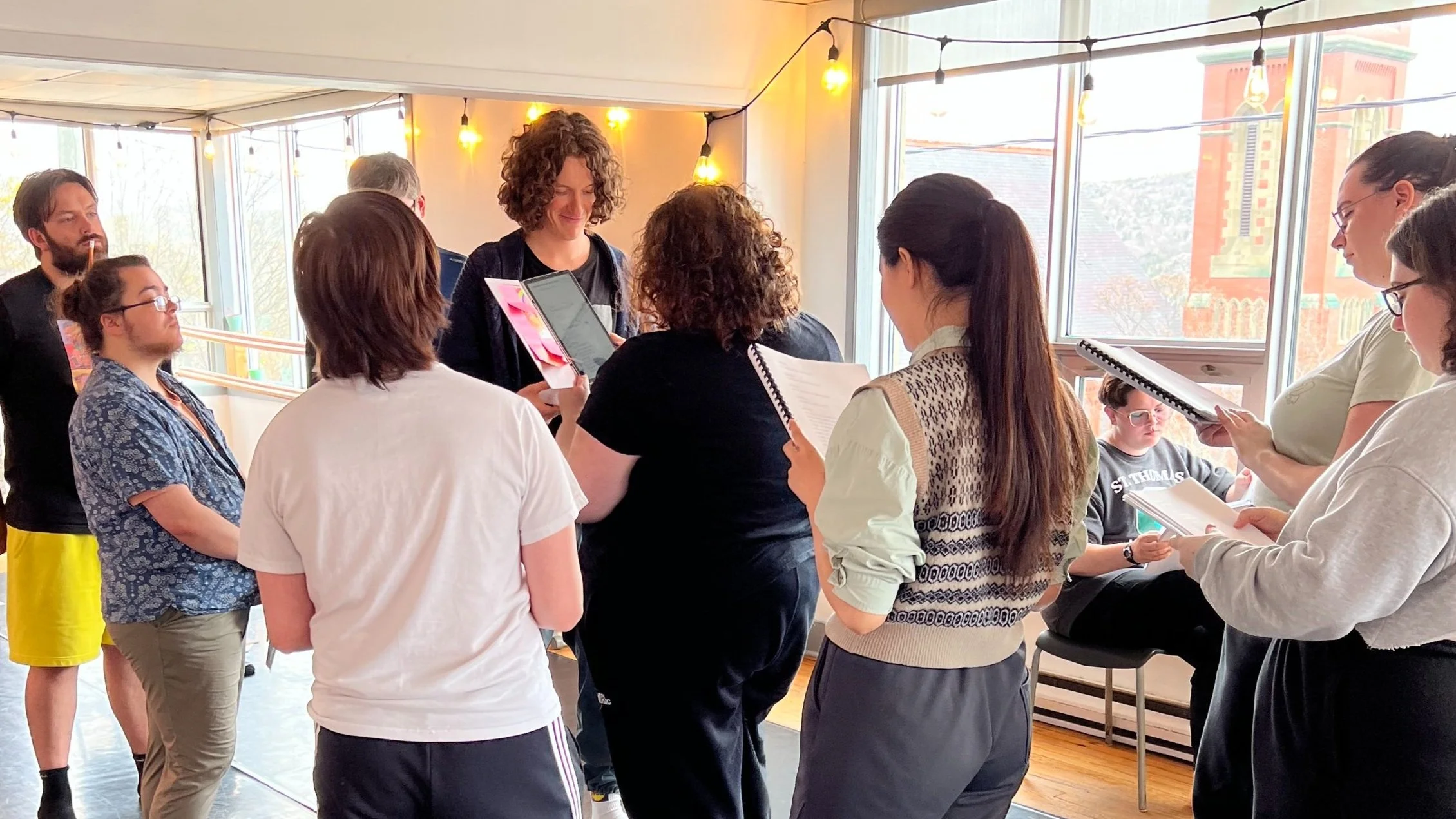
Rehearsing with Care: Best Practices for Consent-Based Rehearsal Culture was originally presented as part of a professional development session with Shakespeare by the Sea in partnership with Untellable Movement Theatre.
In the spirit of building safer, braver spaces, I’m sharing the best practices I offered during a recent workshop called “Rehearsing with Care.” These tools support physical and emotional well-being and emphasize consent-based process.
This isn’t just for intimacy scenes or high-stakes choreography. This is for anyone who walks into a rehearsal room with another human being.
Physical Contact & Blocking
Never move another actor’s body. Even with good intentions, physically adjusting someone undermines their autonomy. If someone forgets blocking, resist the urge to place them back into position.
Ask before touching. Even if it’s been rehearsed before. Even if it’s written in the script. Consent is specific, situational, and revocable.
Model alternatives. Directors and choreographers should use verbal prompts or neutral stand-ins instead of hands-on adjustments.
Emotional Safety & Character Work
Tag in / tag out. Especially useful for emotionally charged or intimate scenes. You can use breath, gesture, or verbal cues to enter and exit character as a way of creating intentional containers around performance.
Connect ahead of time. If you’re in a scene that involves intimacy, confrontation, or vulnerability, take a moment to check in with your scene partner. A simple “You good?” goes a long way.
Build a closing ritual. After difficult scenes, do something physical or verbal to help yourself transition out. One actor I know used to pack their character’s costume into a suitcase at the end of every show, literally putting the role to bed.
Leave the scene in the space. Avoid casual post-rehearsal debriefs of intense moments unless everyone involved has explicitly opted in.
Environmental Practices for Consent Culture
“Pause” is for everyone. Normalize saying “pause” in the rehearsal room, no explanation required. Acknowledge with “Thank you for pausing.” A resource that I return to again and again is the article about the connection between urgency and white supremacy. Read more here.
Make opt-outs normal. Anyone can pass on an exercise or choose a different way to participate.
Hold space, don’t demand it. If something emotional comes up, respect people’s privacy. No one owes the group a disclosure.
Build a room where autonomy isn’t a surprise. It should be expected that people have a say in what happens to their bodies and emotions.
For Directors, Stage Managers, and Facilitators
Check in privately. After emotionally charged scenes or new blocking, follow up with actors individually.
Clarify who’s in the room. This is especially important when rehearsing vulnerable material or early versions of scenes.
Encourage creative alternatives. If an actor voices discomfort, collaborate on a new version of the moment. There’s always another way.
Separate actor from character. Use action-based feedback. Instead of “Be more aggressive,” try “Can you make that gesture sharper?”
Consent is not the enemy of art. It’s the foundation of it.
The stronger the container, the more honest the work.
Responsibility and Care in the Rehearsal Room
Theatre is built on collaboration, and collaboration runs on care. That care looks like consistency, communication, and preparation. It also looks like knowing the difference between what belongs in the room and what doesn’t.
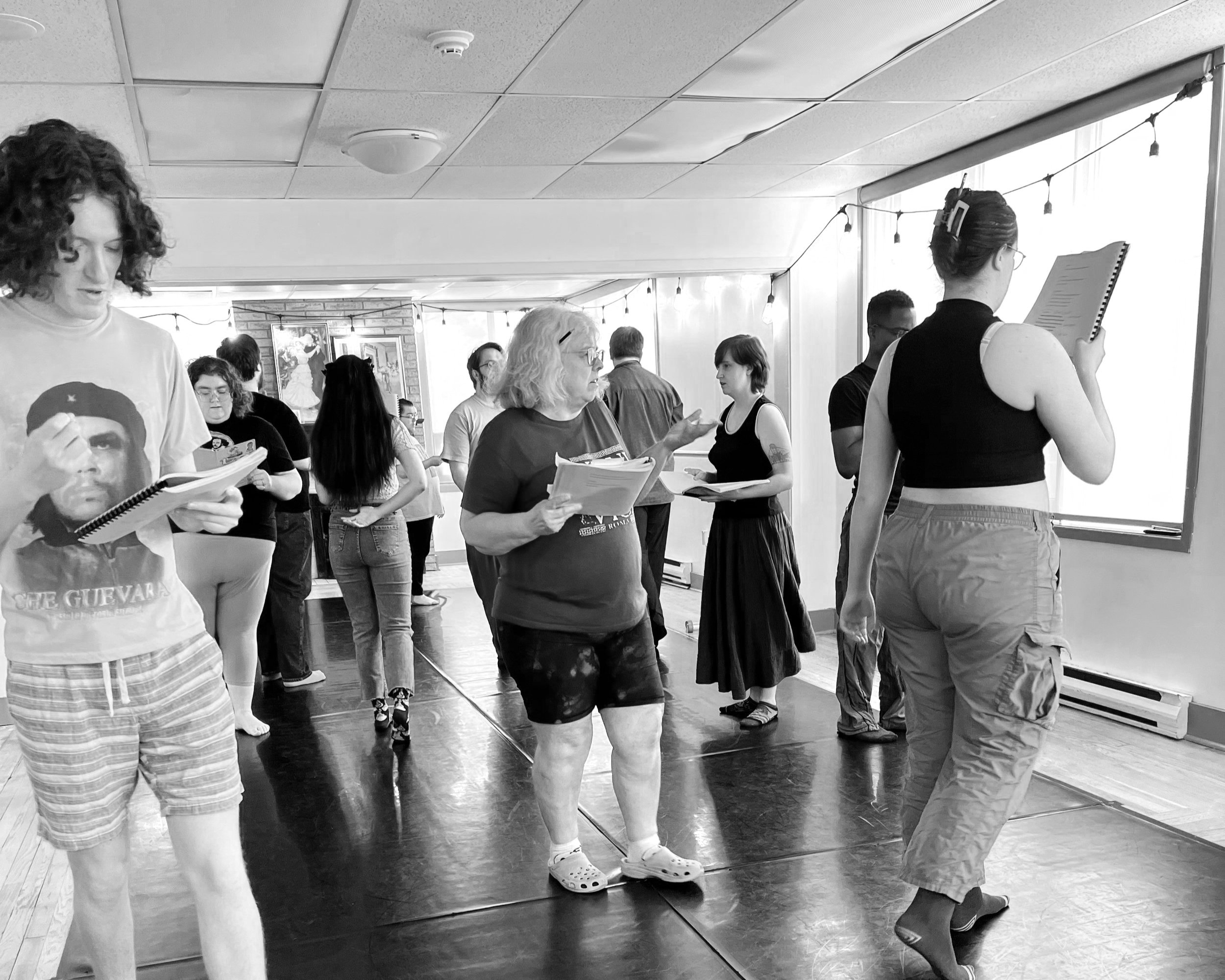
In Rehearsal for Loves Labour’s Lost, SBTS, 2025
My practice takes me from the classroom to community theatre to large-scale professional productions. I work on projects with zero budgets and on shows with full production teams and funding behind them. Regardless of the scale, one thing remains true: how we show up in the rehearsal room matters.
This particular blog is written with emerging artists and community theatre members in mind, but it’s a good reminder for all of us.
Responsibility to the Room
Not everyone arrives to community and semi-professional theatre with formal arts training. In fact, it’s often what makes this work so rich, bringing together people from all backgrounds and interests, driven by curiosity, commitment, and a love of performance.
But no matter your experience, there’s one thing we all share: a responsibility to the room. To the work. And to each other.
Theatre is built on collaboration, and collaboration runs on care. That care looks like consistency, communication, and preparation. It also looks like knowing the difference between what belongs in the room and what doesn’t.
Between Rehearsals: Your Work Doesn’t Stop at the Door
The rehearsal process isn’t just what happens in the room, it’s what happens because of what you bring into the room. That means doing the work outside of rehearsal hours, especially when time is tight and ensembles are learning at different paces.
Here’s how to show care between rehearsals:
Rehearse on your own.
Go over lines, blocking, choreography, or vocal warmups. Watch rehearsal footage. Get things into your body. Being “off-book” is more than memorizing, it’s about making space for real connection in the room.
Strategies for Line Learning:
Break your lines into thought units.
Record cues and responses and run them during walks or chores.
Speak your lines while doing a repetitive task: train your brain and body together.
Ask questions—early.
If you’re unclear about something, ask before the next rehearsal. Don’t wait until you’re back in the space. That puts time pressure on your director and slows down the room.
Take care of yourself outside of rehearsal.
If I’ve said it once, I’ve said it 100 times: Theatre is not therapy. It can be therapeutic, yes, but it’s not a substitute for professional support. Take responsibility for your mental, emotional, and physical well-being before you walk in the door. It’s one of the most generous things you can do for the collective.
If You Need to Miss a Rehearsal: What Happens Next
Sometimes life pulls you away. An emergency, a scheduling conflict, an unexpected illness. But how you handle that absence matters.
Let the team know early and clearly.
Don’t ghost. Don’t wait until an hour before. Tell the director and stage manager with as much notice as possible. Respect the fact that your absence will have ripple effects and added labour.
Own the catch-up process.
Ask for notes. Watch recordings. Schedule time with a peer to run material. Don’t expect the director or SM to redo the work for you.
Stay present in spirit, even when absent in body.
When you’re out, the work still moves forward. Keep yourself in the loop so you can reenter seamlessly. Staying in communication shows your care.
Navigating Transparency Without Derailing the Room
Rehearsals can be emotional. Vulnerability is part of the work. But it’s important to remember that the rehearsal room is a shared space, not a place to offload or process personal crises in real-time.
Be transparent—but don’t take the air out of the room.
Let the director or SM know if you're having a tough day. Then focus on what you can contribute. Maybe you listen more. Maybe you adjust your energy. Maybe you take a break if needed.
Being part of an ensemble means being accountable for your presence and for your impact. That includes how your energy supports (or disrupts) the room.
Care is a Practice
Responsibility isn’t about perfection, it’s about consistency. It’s about recognizing that when you join a show, you're not just performing. You're becoming part of a temporary community that needs your care to function.
Show up prepared. Communicate clearly. Contribute with generosity.

Transparency Costs Comfort: Practicing Values When It's Hard
Transparency is just one value. But this is how I practice it. I don’t always get it right. But, I try to let my values guide my choices, even when my instinct wants to hide. It’s not comfortable. But it is honest.

Transparency is a value I hold dear. It’s baked into how I direct, choreograph, teach, and show up in the world. But I’ve learned that transparency comes at a cost.
Its most frequent casualty? Comfort.
Here’s what I’ve observed: nearly every institution, company, or project I work with has a policy. And most often, it’s a good one. These policies name values like respect, equity, or collaboration. Most people agree with them, at least on paper.
But when discomfort enters the room, those values falter.
In practice, I’ve watched people (good people) dismiss concerns, avoid naming harm, or smooth things over just to keep the peace. Not because they’re malicious. Because they’re afraid. Because the cost of staying in alignment with their values felt too high in that moment.
Because it was easier.
I understand this. I’m not a lover of conflict. I want things to be nice. And still, I believe that real change requires us to stay in the room when things get hard. We have to reckon with the truth.
Growing pains aren’t optional if you want to grow.
And values, if they’re only words on a page, are impotent. They don’t shift power, change culture, or protect people.
From Ideology to Action
Values must be practiced. Not once. Not when it's easy. But consistently, especially when it would be easier not to.
They aren’t real until they show up in how we speak, decide, apologize, protect, and adapt.
So, how do we actually live our values?
Practicing Values When It's Hard: A Framework
1. Know What You Actually Value
What do I stand by, even when it costs me something?
2. Turn Values Into Verbs
If you say you value equity, what do you do when someone is excluded?
If you say you value transparency, how do you communicate when the truth is messy?
Use if/then thinking:
If I make a mistake, then I repair.
If I see harm, then I name it.
3. Build a Practice of Discomfort
Discomfort isn’t danger. It’s feedback. It means you’re on the edge of something important.
Practice staying.
Normalize sweat.
Normalize fumbling.
Normalize trying again.
Ask:
When do I retreat?
What would it look like to stay present instead?
4. Stay in Dialogue
Invite others into your process.
Here’s what I believe. Here’s where I’m struggling. What do you see?
Make space for:
“That felt out of alignment.”
“You said this, but did that.”
“That landed in a way you might not have intended.”
5. Repair. Recommit. Repeat.
You will get it wrong. That’s part of it.
Repair with humility.
Recommit without shame.
Keep going.