
Building a Responsive Ensemble
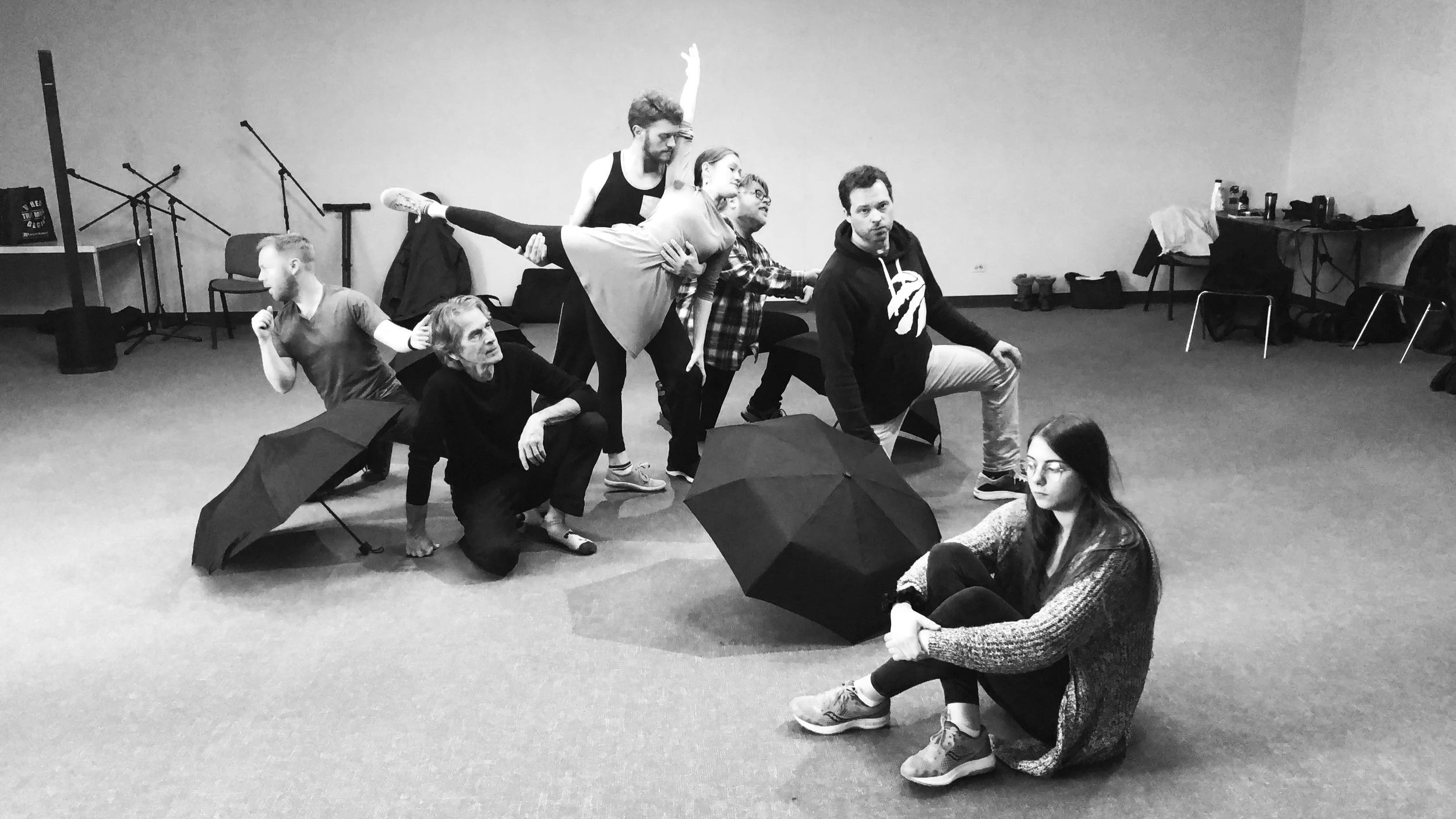
Workshop of 11:11, 2020
Introduction to Responsive Ensemble Framework was delivered in partnership with St. John’s Shorts and Untellable Movement Theatre, focusing on how ensemble building can be responsive, collaborative, and rooted in the strengths of the people in the room.
My process is rooted in movement because that is my entry point and expertise. About half of what I bring into the room are exercises I have refined over 20 years, practices I know will work across all groups, abilities, and entry points. The other half is created in direct response to the production itself, the specific people in the room, the nature of the show, and the objectives of my role. That responsiveness is key because it ensures that the ensemble-building process is never a one-size-fits-all template but a living, collaborative approach that meets the unique needs of each project.
What We Did
The workshop began with a movement exercise called Stand, Sit, and Lie, exploring connection, proximity, and speed. We then worked with non-contact gestures to explore dynamics between individuals. The final activity was a case study based on participant suggestion, experimenting with space, duration, time, and the concept of the evolution of man.
Additional topics included:
Spaces that thrive because of aligned values
The creation of memory through movement
Communicating with actors in an ensemble environment
How ensembles lead to more information sharing than a more traditional hierarchical structure
Bringing your whole self to the table as a collaborator
Four Key Ideas from the Session
1. Understand that this only works in a collaborative environment.
A responsive ensemble thrives on shared authorship and open communication. If the process is overly hierarchical, the space for creative exchange shrinks, and the benefits of this approach are diminished.
2. Ground the ensemble in your own strengths and experience.
Begin with methods you know will work, ones that have proven effective in building connection and trust. Use these as the foundation, then build outward with exercises and explorations tailored to the production.
3. Learn how to watch the room.
Notice the dynamics that emerge. Who thrives on clear boundaries? Who is quieter in a group setting? What chemistries are forming? Where is there friction? This information is invaluable and can be applied in real time to avoid tender spots and to lean into each person’s strengths.
4. Be responsive.
Every production has its own rhythm, needs, and personalities. Adapt the process to the specific individuals and circumstances rather than applying the same structure to every situation.