STACON26: Movement as Universal Language

Hello!
I’m Lynn Panting director, choreographer, movement director and intimacy director.
This page is a practical companion to my STACON26 session and is designed as a resource that you can revisit.
If you’re a director, actor, dramaturg, stage manager, educator, or choreographer working with text-heavy material: these tools are meant to help you get into the story through the body.
STACON26 / Shakespeare Theatre Association (January 2026, St. John’s, NL)
Session: AB03: “Did I Not Dance With You In Brabant Once?” Movement as Universal Language through the Lens of Love’s Labour’s Lost
When: Friday, January 9, 2026 • 2:00–3:15pm NST
Where: Salon A/B, Sheraton Hotel Newfoundland
With: Justin Genna • Moderator: Lily Narbonne
The Toolkit
Proximity.
Focus.
Mirroring.
Three physical tools for clearer story, deeper connection, and more accessible Shakespeare.
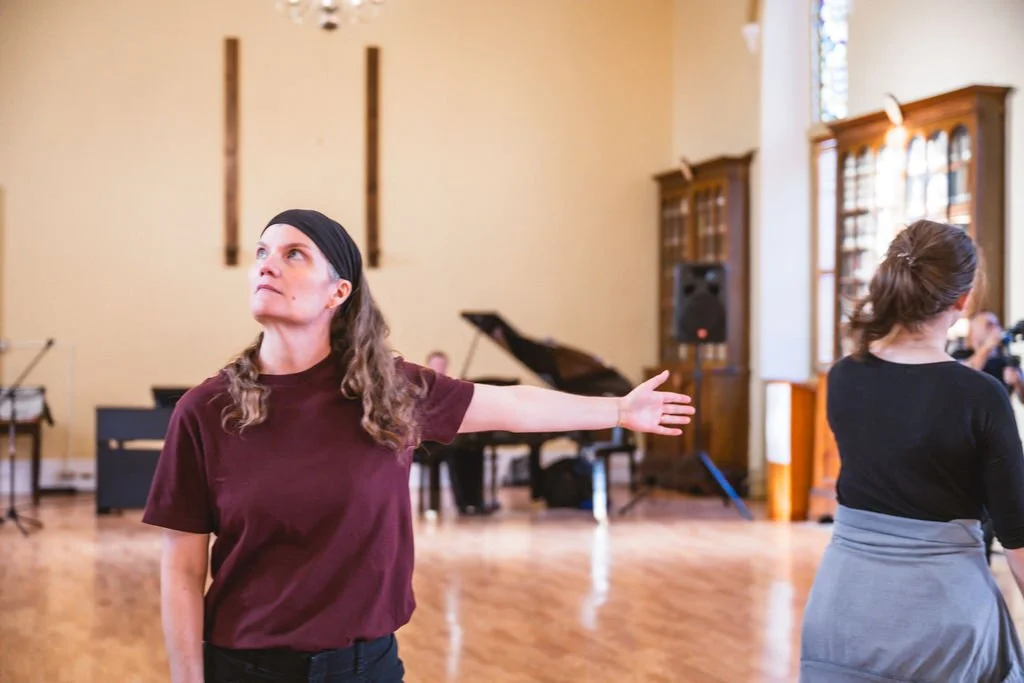
Proximity: distance tells the truth
What it does: clarifies relationship, status, attraction/avoidance, tension, safety, power.
A quick rehearsal prompt:
What is the minimum distance these two characters can tolerate right now?
What is the maximum distance they will allow before the scene breaks?
Block the scene once using only those two limits.
Try these “proximity choices” (pick one):
Orbit: one character circles; the other holds ground.
Magnet / Repel: move closer on agreement, move away on resistance.
Threshold: one character never crosses an invisible line (until they do).
Best for: scenes with persuasion, flirtation, rivalry, confession, apology, denial.
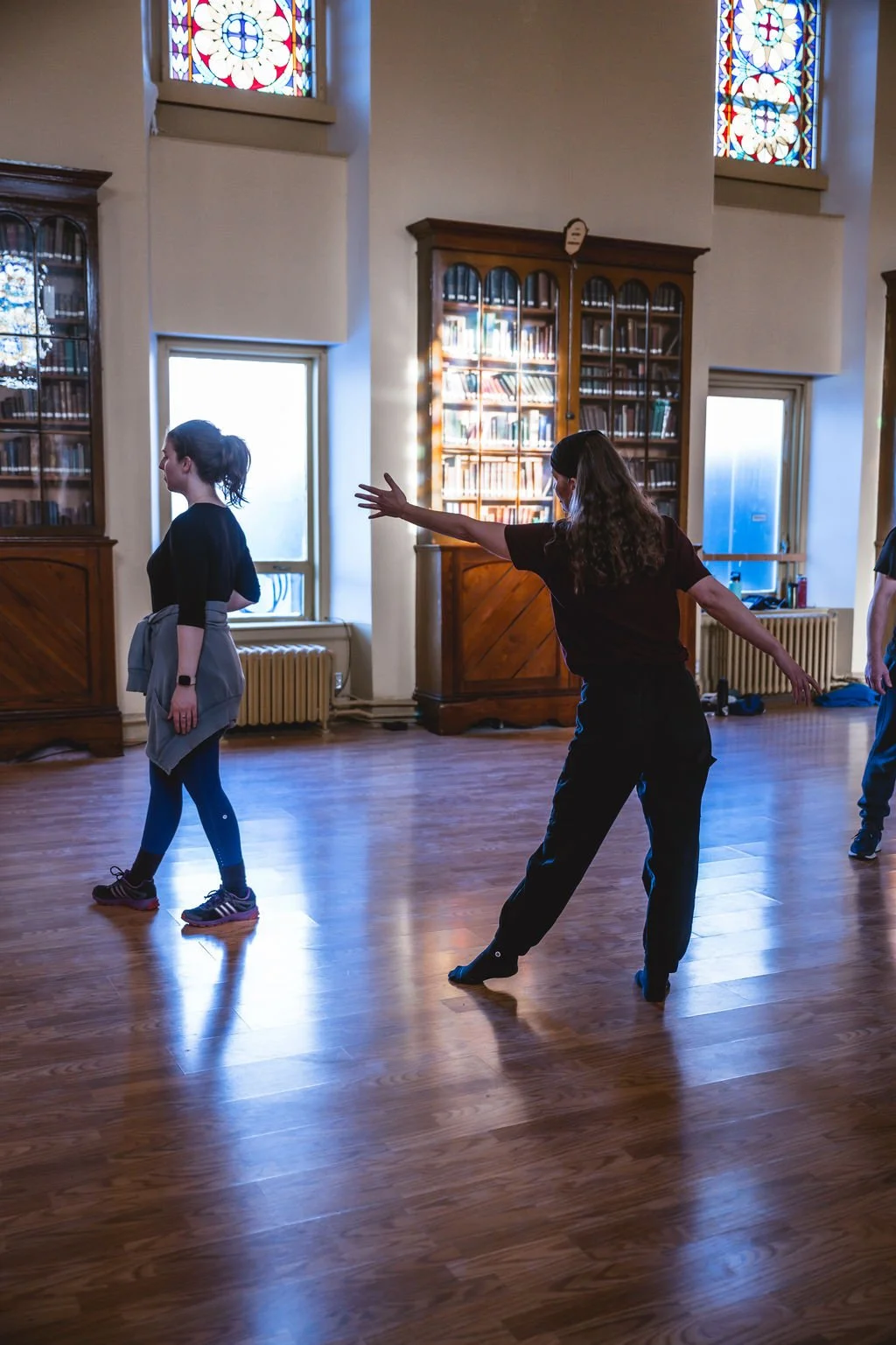
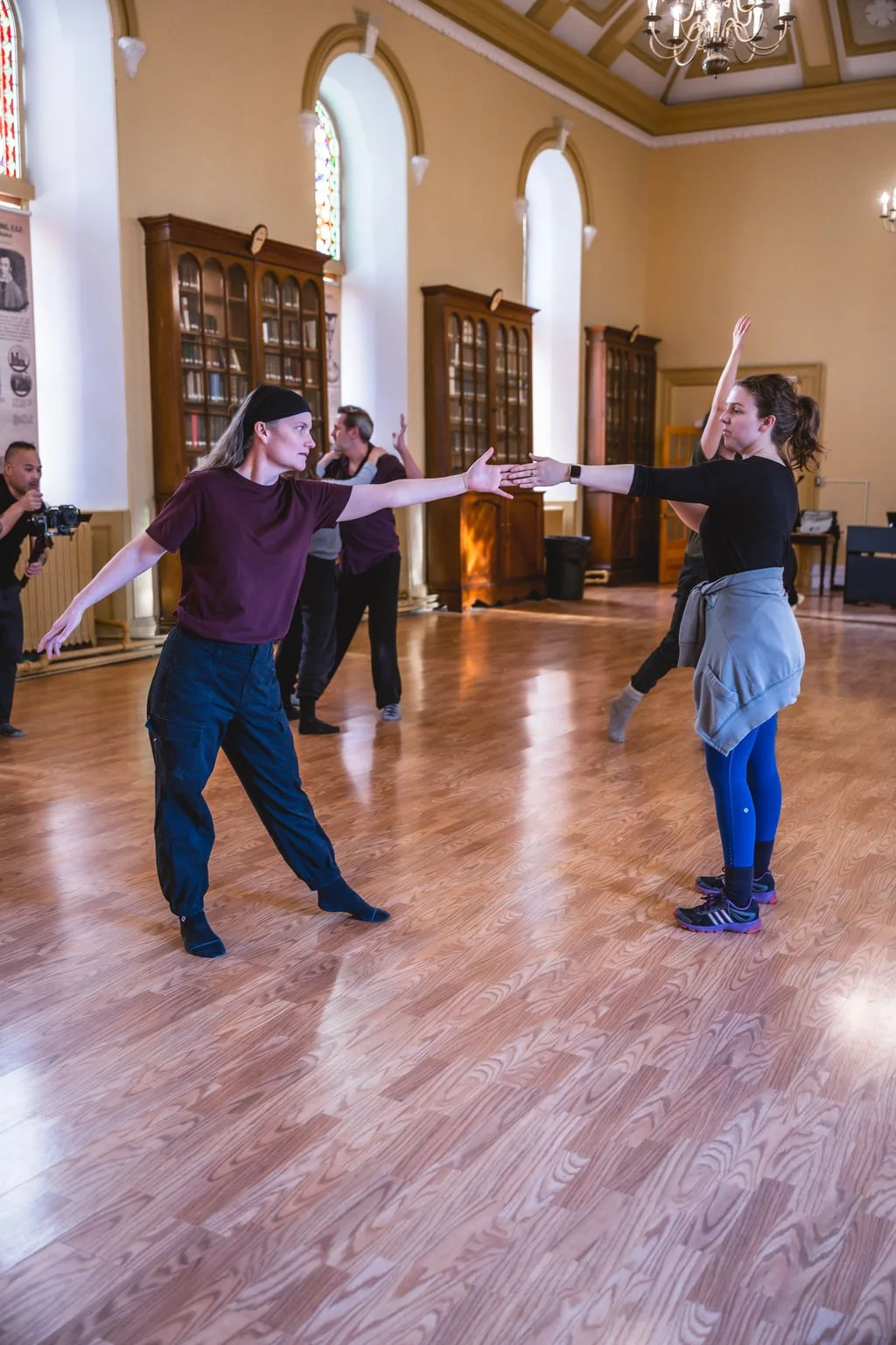
Focus: where attention goes, the audience follows
What it does: demonstrates attention and intention.
Scales of focus
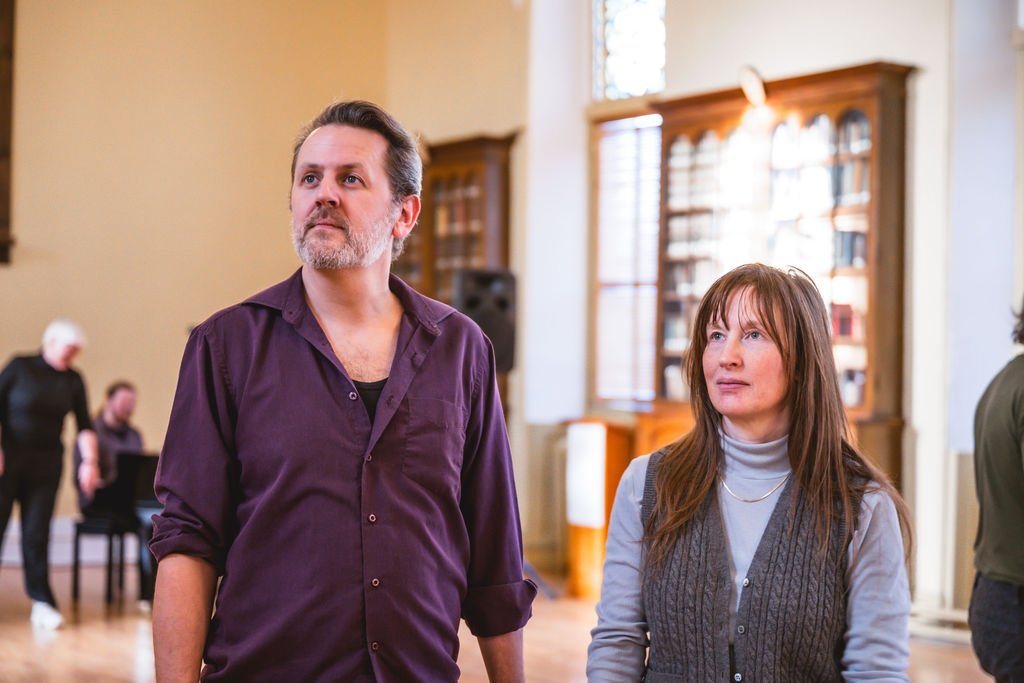
Wide / Horizon focus
Attention reaches outward or beyond toward distance, sky, ideas, or imagined futures.
Reads as: longing, idealism, abstraction, avoidance
Relational / Peripheral focus
Attention is oriented toward another person without direct eye contact.
Reads as: restraint, testing, politeness, power negotiation, obsession
Specific / Task-based focus
Attention narrows onto a small, concrete detail
Offers a precise anchor
Direct and indirect focus
Direct focus: eyes clearly land on the object or person
Indirect focus: attention is present, but eyes never fully arrive
Matching and diverging focus
When focus matches there is immediate alignment and chemistry.
Mirrors and Echos: shared vocab creates meaning
What it does: builds ensemble connection fast; reveals alignment, discord, intimacy, and rivalry.
A quick rehearsal prompt:
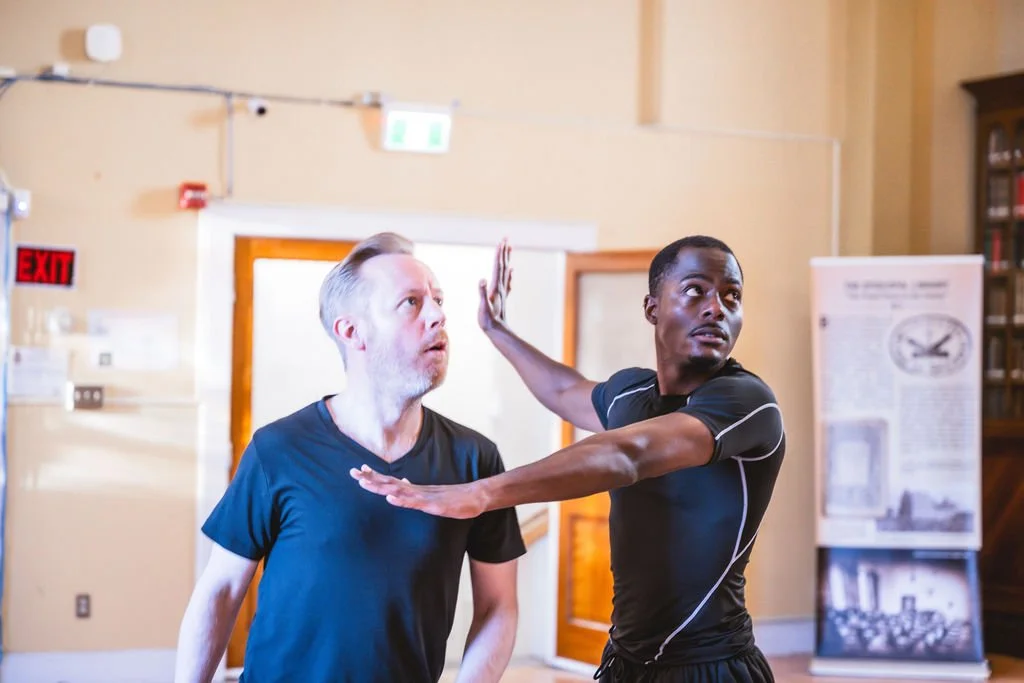
Give a pair a short exchange. One actor leads with a gesture; the other mirrors:
first exactly
then with a one-beat delay
then as a transformation (change the movement by 10%, 25%, 50%)
Options:
Mirror: an exact copy.
Echo: repeat the physical idea.
Counter-mirror: match energy but invert shape.
Try it in 5 minutes (no special skills required)
Use this as a warm-up, a reset mid-rehearsal, or a table-work alternative.
Proximity: Partners choose “near” and “far” distances for the moment.
Focus: Speak one line while changing focus at the midpoint. Have the scene partner note the focus change and adjust to the new point of focus.
Mirroring: Repeat the line again, this time mirroring your partner.
Reflect : What became clearer about the relationship or objective?
Accessibility & Consent
This work is grounded in consent-based practice.
Participation is always invitational.
At no point is anyone required to move, touch, speak, or demonstrate. Observing is a valid and active form of participation.
Participants are welcome to:
opt out of any exercise, partially or fully, at any time
participate seated or using chairs, mobility aids, or other supports
adapt movements to suit their body, energy level, or access needs
engage at the level of focus, imagination, or micro-movement rather than full-bodied action
Exercises can be translated into:
stillness rather than motion
gesture rather than locomotion
internal or imagined movement rather than external expression
There is no “correct” way to perform these tools. The goal is clarity and connection.
Consent and accessibility are not add-ons to the work; they are what allow the work to function.
Work with me
If you’d like support integrating movement-based storytelling into your process, I offer:
rehearsal-room movement direction for classic and contemporary text
actor-friendly movement tools for ensemble
intimacy-informed staging support
workshops for companies, universities, and training programs
Contact: lynnpantingdance@gmail.com
Instagram: instagram.com/lynnpanting
LinkedIn: linkedin.com/in/lynn-panting